Monday, April 26, 2010

Tasting Bordeaux Vintage 2009: Part 1, Dinner at Ch. La Dominique, Tasting at Chx. Desmirail, Rauzan-Ségla & Siran.

The western wine press has been abuzz over Bordeaux’s vintage 2009; some touting it as the next "vintage of the century" - better even, some claimed, than the incredibly pricey 2005. I, personally, was quite skeptical as this is the third “vintage of the century” so far (the others were 2003 and 2005).

Knowing my wife and I would be in Spain late March to early April 2010, the Vigneron thoughtfully invited me to attend the Union des Grands Crus de Bordeaux tasting of vintage 2009. Because I rely on my own personal assessments, I jumped at the chance to see for myself what the hullabaloo is about.

Making a detour from Bilbao, my wife and I drove northward for around 3-1/2 hours to Labarde, Bordeaux - back to the genteel confines of Château Siran's 17th century manor. Happily, Juan Carlos and Mari de Terry joined us at Siran on the same date, but arrived later in the evening.
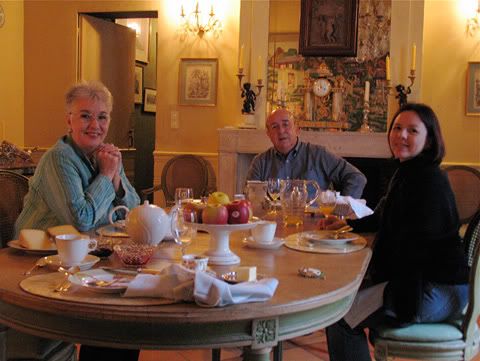
Catha and the de Terrys at breakfast in Siran the morning after.

Dinner that night of the 29th March was at Château La Dominique in St-Emilion, but Catha stayed behind to make sure the de Terrys were properly received at and settled in Siran. As it turned out, when JC and Mari arrived, they decided to take Catha to dinner at the Hotel de France et d'Angleterre in nearby Pauillac, where they had a lot of fun themselves.

As for the Vigneron and I, after a quick stop at Château Corbin to say hello to Sebastian and Anabelle Bardinet, we arrived at La Dominique in time for cocktails where I bumped into Count Stephan von Neipperg (of Châteaux La Mondotte, Canon-la-Gaffelière, Clos de l'Oratoire, d'Aiguilhe, etc.). I reminded him that he had entertained me and my former EO group before in his château, and, we had met again a couple of times later on in Hong Kong - to which he smiled and humbly replied: "It is good of you to remember this old farmer". Old farmer? Yeah, right (to coin the Stockbroker's comment).
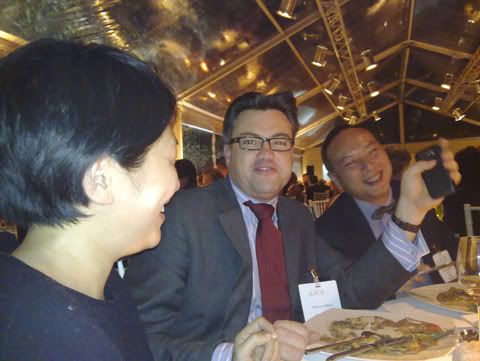
Judy Leissner, Edouard Miailhe and Wilson Kwok.

Dinner proper commenced in due time. At our table were friends from Hong Kong: energetic and bubbly Grace Vineyard China CEO Judy Leissner, French-fluent and fun Wilson Kwok. Venerable WINENOW HK Magazine owner Mr. Lau was snagged to another table. Also at table were Château Doisy Daene's Fabrice Dubourdieu (recently in the Philippines for the Commanderie de Bordeaux Manila's launch), China-based wine writer Michael Tse and Château Labegorce owner Nathalie Perrodo, making up a lively table indeed.

With so many château owners and winemakers at the dinner, there was certainly no lack of wine.
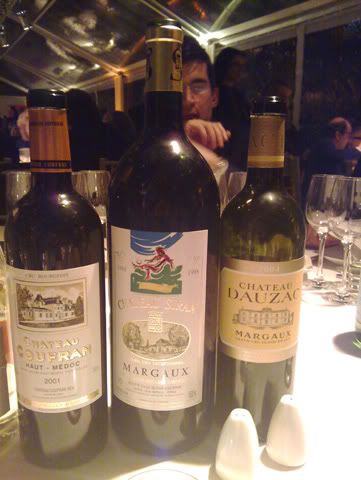
2001 Coufran, 1999 Château Siran (Magnum) & 2004 Château Dauzac
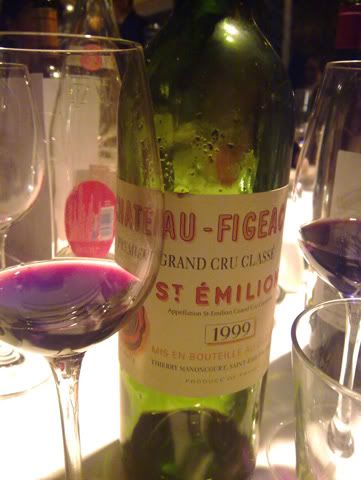
1999 Château Figeac
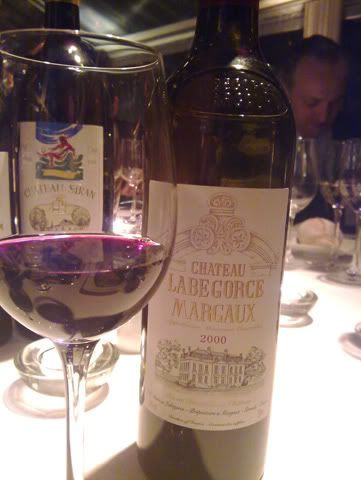
2000 Château Labégorce

Conversation was lively and the atmosphere convivial - certainly not an occasion for wine analysis, so I relaxed, took no detailed notes and just let the evening flow. Honestly, at their respective prices and quality, I would not hesitate to buy any of the above-mentioned wines. The 1999 Château Siran I've written several times about as I've often enjoyed it and almost all in magnum format. The 2001 Coufran (of the Vigneron's cousin, Eric Miailhe) offers comforting, honest typicity with a great quality-to-price ratio; the 2004 Dauzac is an example of a polished, yet traditional style of Margaux, the 1999 Figeac just underscores Figeac's consistency in high quality even in less-than-stellar vintages; and, 2000 Labégorce definitely did justice to its fine vintage.

There were a few other reds, but I no longer recall what they were and took no photos of them. Since I was a bit tired, I forgot to take a photo of the first course, but it was Carpaccio de Saint-Jacques au Citron Vert et Basilic - sort of ceviche of thinly sliced scallops with a hint of basil.
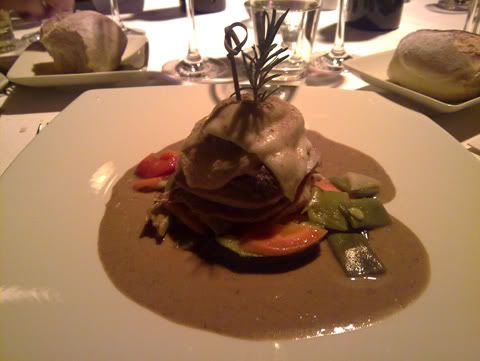
Pardon the very low quality photos as I was just using my phone's camera at this dinner.

The main course (photo above) was Millefuille de Veau en Tapenade de Cèpes, Fricassée Croquante du Maraîcher, Fumet des Sous Bois - as best I can describe, very tender and yielding cuts of veal stacked alternately with minced mushrooms - a sort of savory/meaty napoleon, if you will.

The cheese plate included Roquefort, Brie de Meaux-Lait de Vache, St-Nectaire-Lait de Vache and Comté Dous-Lait de Vache (sorry, no photo either). I don't know why they kept specifying the 2nd to 4th cheeses as made from cow's milk as I've only ever known those cheeses to be as such (not that I'm any cheese expert or anything).
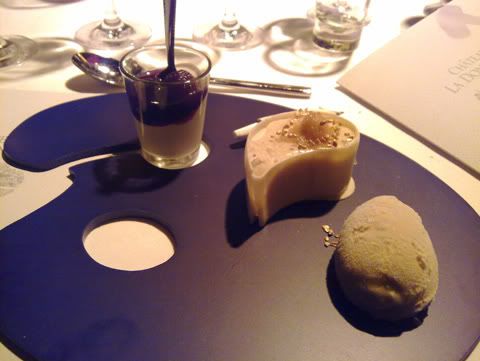
Dessert was a whimsically named "Peinture et Gourmandise" - Servi Sur Une Palette de Peintre, Larme Pommes-Sauternes, Panacotta au Caramel de Bordeaux et Poires Pochées, Glace au Cannelé et Tube de Mangue. - (almost) literally: "Painting and Greed" served on a painter's palette of a tear of Sauternes-poached apple, Bordelaise caramel panna cotta and poached pears; cinnamon ice cream; and, a tube of mango. I don't think any of us from Asia even bothered to brave trying the tube of mango.

Served with dessert were 2 Sauternes:

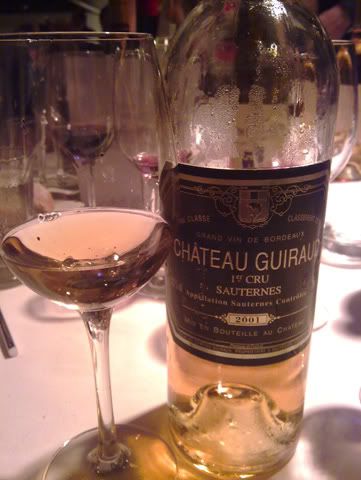
2001 Château Guiraud
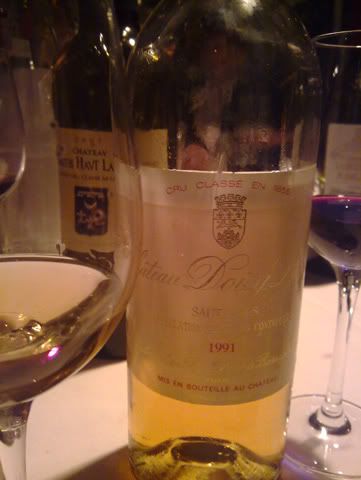
1991 Château Doisy Daëne (from Fabrice Dubourdieu, naturally)

From an exceptional Sauternes vintage, though still very young, the 2001 Guiraud was immediately pleasing in a more indulgent, luxurious, creamy style with good acid balance. The 1991 Doisy Daëne, though, was a real treat - pure, clean and graceful on the palate, it brought to mind images of a ballet. Until this bottle, I do not believe I'd had before any Doisy Daëne older than their 1997. I'm glad I got to try this one as it was a wonderful way to end an evening.

Tastings began the next day (30th March 2010), grouped by appellation, held at pre-designated châteaux. Considering, however, that I would have to drive and the weather was quite cold and rainy, I opted to go only to the nearest ones. Catha and Mari took JC's car to go sight-seeing while JC and I took mine to hit the châteaux. I didn't need my GPS at all as JC knows the Médoc like the back of his hand, even the smallest dirt roads way off the Route des Vins.
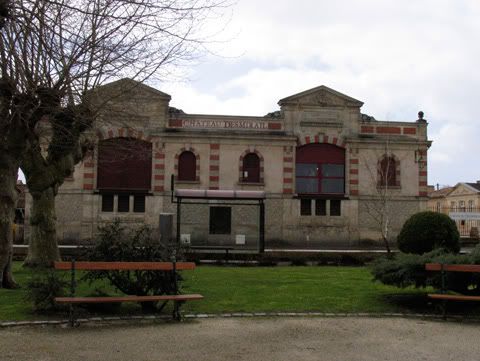
Our first stop was the nearest one - Château Desmirail - whereat the wines of UGC members from Margaux were featured.
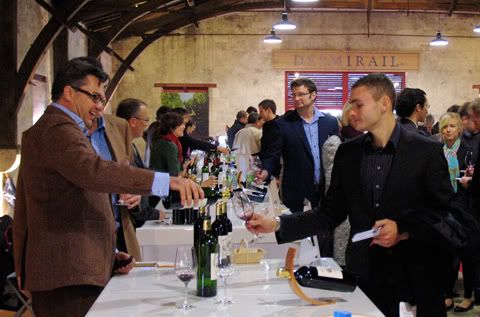
The Vigneron proudly pours his consistently highly rated 2009 Siran.

I tasted through all the wines available at Desmirail. Generally, the available Margaux wines were marked with finesse and healthy acid lift and balance. I felt most were characterized by old-school typicity, particularly compared to those of the more alcoholic, sweetish, roasted-ripe and fruit-forward 2003 and 2005. Fine and sweetish tannins seemed the name of the game. The standouts for me, in no particular order, are as follows:
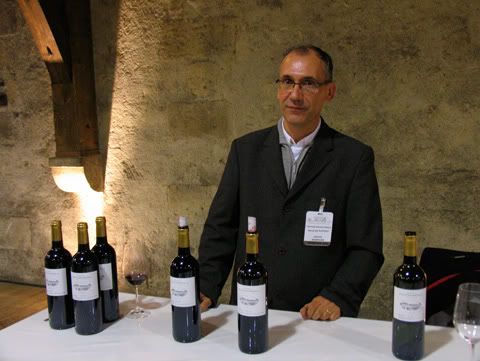
Rauzan-Ségla Winemaker Henry de Ruffray

2009 Rauzan-Ségla – Commanding presence on the palate, intense, but with good purity and finesse. Remarkable balance and harmony. There is power in this, but shows classic self-restraint.
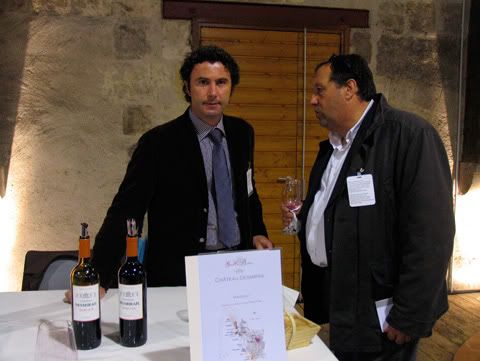
Desmirail Commercial Manager Rémi Molis

2009 Desmirail – Licorice, new leather, violets, minerally blackcurrant, hint of pencil lead. Graceful oak. Definitely a good one, but more interesting in the nose than on the palate at this point.
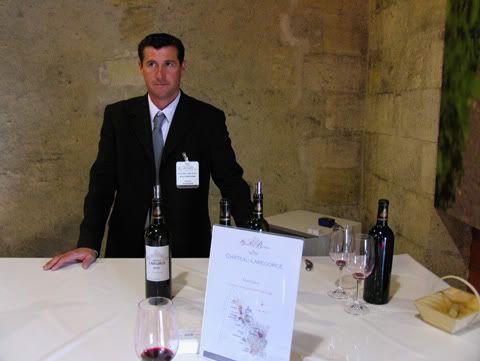
Labégorce Cellar Master Bruno Bergamin

2009 Labégorce – Penetrating berry/fruit; notable focus. Medium-bodied, bright with healthy acid balance. Immediately pleasing.
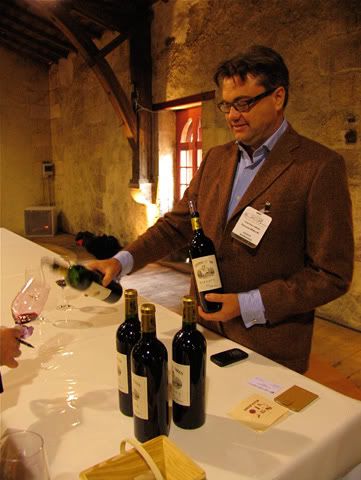
Manila & Bordeaux's own Edouard Miailhe of Siran

2009 Siran – Good fruit focus, clean dark berries and violets, slight petit verdot spiciness. Typical Siran masculinity. Nice acid balance. Classical cut.
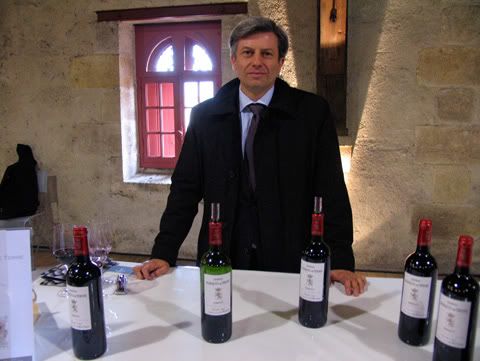
Marquis de Terme's Directeur Ludovic David

2009 Marquis de Terme – Fresh clean nose with suggestions of jasmine in sweet plum and violets. Vibrant on the palate though so very young.
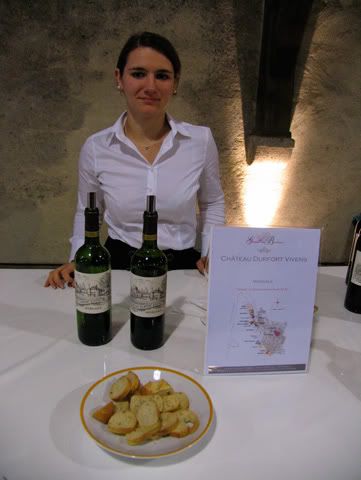
2009 Durfort-Vivens – Expressive aromas virtually jump from the glass. Deep, sweetly ripe fruit with hints of wet tea leaf and chocolate. Aromas mirrored on palate. Another charmingly precocious one.
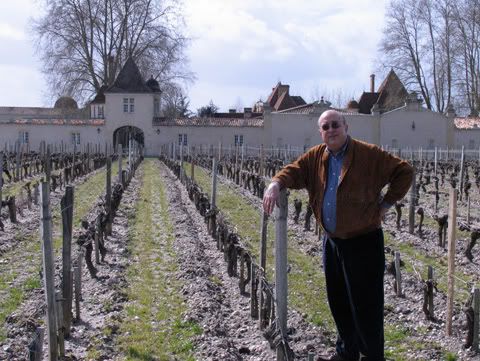
As JC de Terry's Terry Selection distributes the wines of Rauzan-Ségla, JC got me invited to the Ulysses Cazabonne (the negociant house owned by Rauzan-Ségla) vast tasting at Rauzan-Ségla...
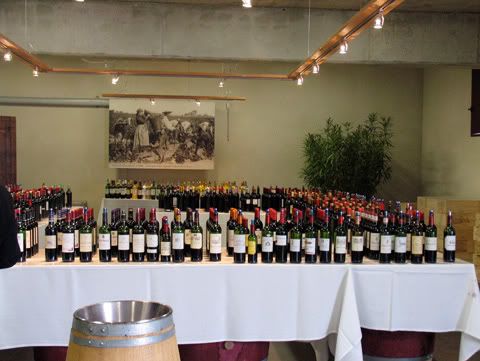
...where we partook of a delectable lunch as well...
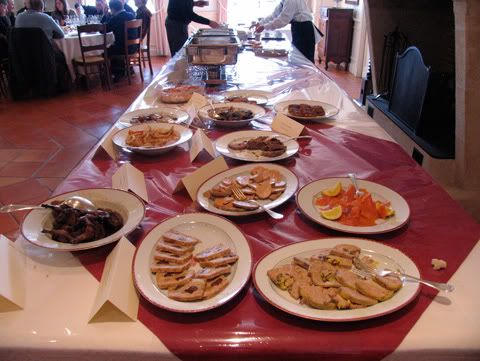
A buffet of typical Bordeaux cuisine, I concentrated on...
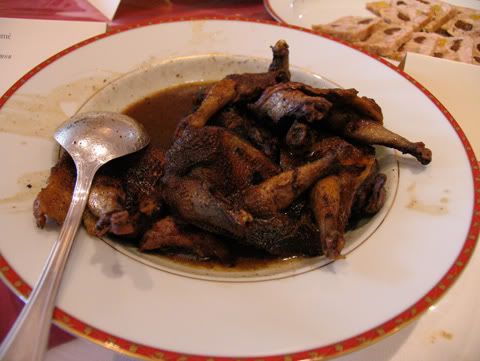
Roast Pigeon, I can never resist this dish.
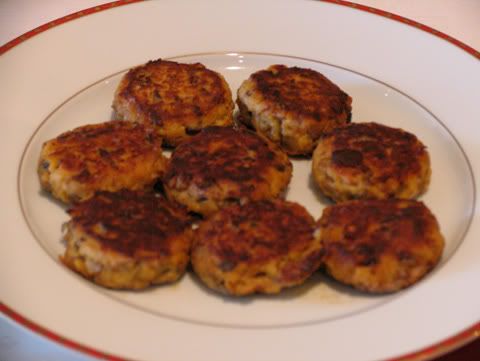
I can't remember the name of this dish, but it was absolutely delicious (JC knows what it is). I ate 4 of them and stopped only because I still had a lot more "work" ahead of me.
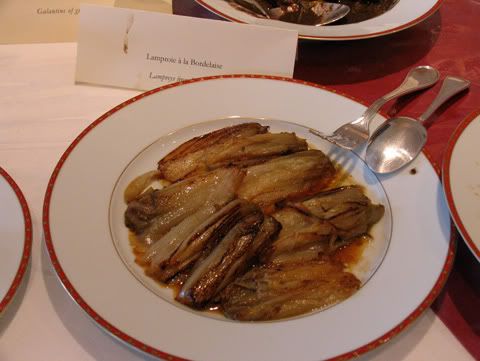
In season, caramelized French Endives. Heavenly.

The wines served with lunch were quite nice, especially the...
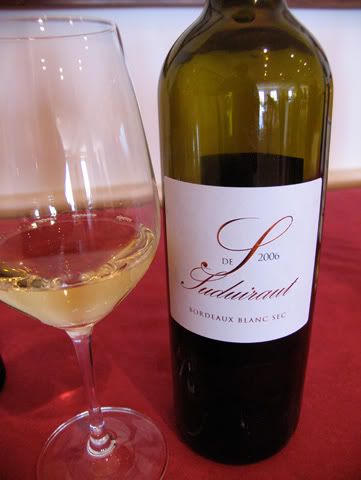
2006 "S" de Suduiraut Bordeaux Blanc Sec, and, the...
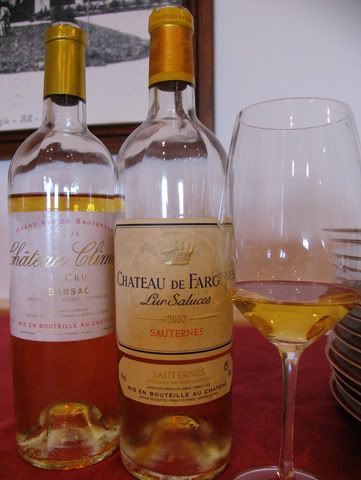
...2004 Château Climent which I had with my foie gras and 2002 Château de Fargues which I had as my dessert. Both were very good, but I must say that the de Fargues was my favored sweet wine that lunch. It was good to be able to swallow the wines for a change after so many hours of spitting everything.
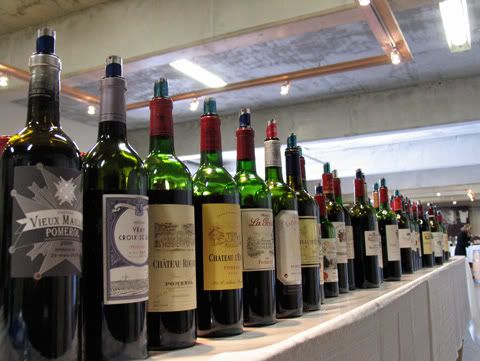
At Rauzan-Ségla, prior to lunch, I concentrated on the right-bank wines which seemed generally a bit low in acid, sweet, chocolaty and oaky. Those who like this type of wine will likely well appreciate those of 2009 Quinault l’Enclos, Rol Valentin, Péby Faugères and La Gomerie.
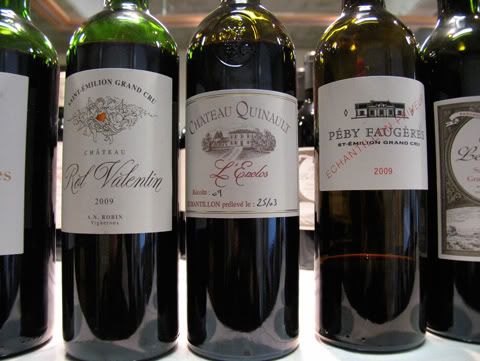
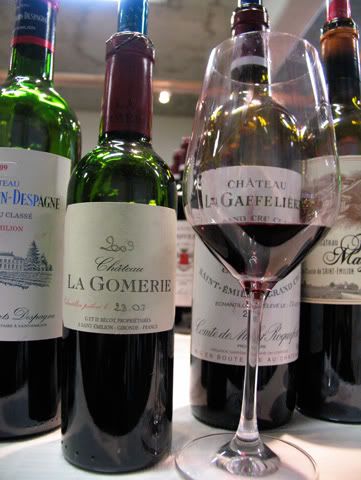

That said, for me, those right-banks worth particular mention were:
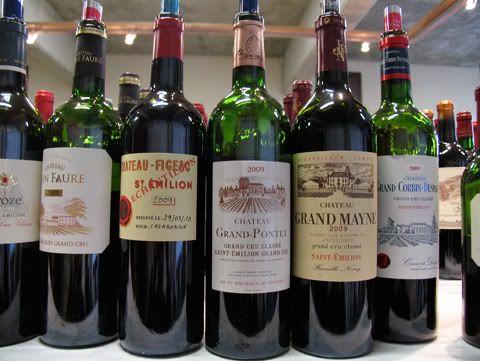

2009 Figeac - Clean, pure, vibrant fruit. Healthy acidity and admirable balance. Elegant. The relatively higher percentage of cabernet sauvignon is apparent.

2009 Beau-Séjour-Bécot – Perfumed nose of rose petal, vanilla, damson, minerals and toasty oak. In the mouth, minerally black cherry, underlying ripe plum with chocolate notes. Good concentration and extraction, but doesn’t come off as over-done.
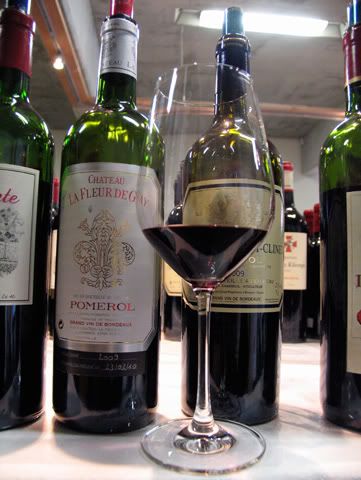
2009 La Fleur de Gay – Rich, ripe black cherry under raspberry, kirsch, tobacco, chocolate, bit of tar. Lots of concentration and extraction. Lowish acid and a sweet cherry finish.

2009 Feytit-Clinet – Though the nose is a bit closed, it displays notable purity in pretty cherry and raspberry notes touched with hints of tobacco and chocolate all on a medium body.

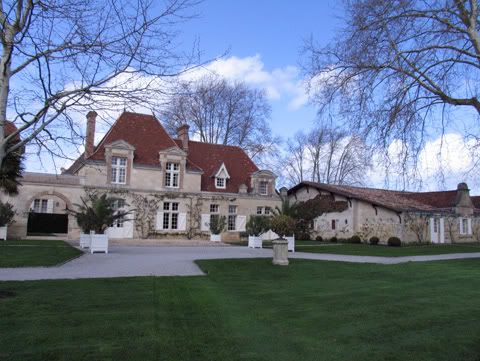
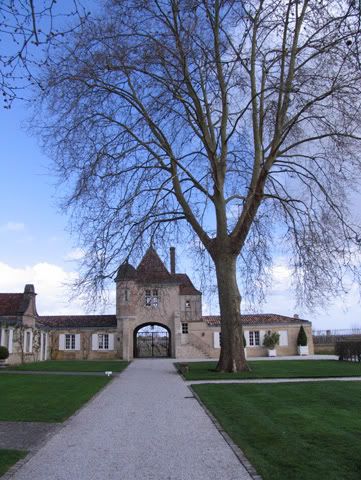
We were scheduled to meet the wives back at Siran by 4:30pm, so we thanked our hosts and took a few shots from within Rauzan-Ségla's manor grounds (restricted entry, but JC got us in again).

After washing up and resting for a few minutes, we attended the Crus Exceptionnels event at Siran's tasting room where the Vigneron, the current head and spokesperson of the 9 Exceptionnel châteaux association, was briefly interviewed about their 2009s.
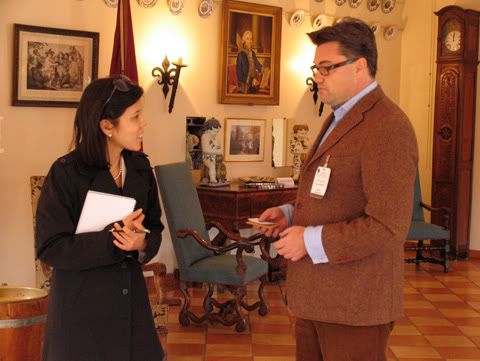
Edouard with Wine & Dine Singapore Editor Leena Ng.
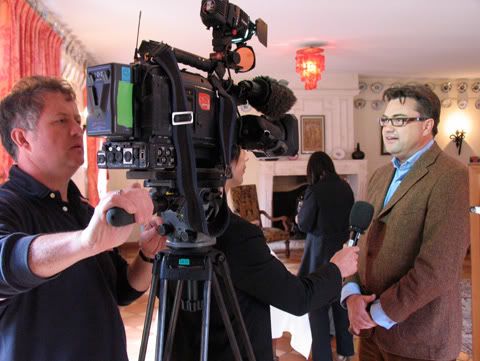
Being interviewed by major French television channel TF1.

Personally, worth particular mention in that tasting were the 2009s of Les Ormes de Pez, Phélan Ségur, Poujeaux and Siran. Some may think that I favor Siran's 2009 because of my friendship and/or professional connection with the Miailhe family, but I assure you that is furthest from the truth. Case in point: it is not only I who thinks highly of the 2009 Siran - as attested to by the consistently high ratings of: Wine Spectator (90-93), Decanter (4 out of 5 stars; 17/20), Wine Advocate's Neal Martin (88-90) and, my wine critic of choice, Jancis Robinson, MW (17/20). Enough said.

Next, tasting 2005 and 1999 Margaux wines during dinner at Château Prieuré-Lichine, 2009s of Pauillac and St-Julien at Château Batailley, and the Commanderie du Bontemps dinner at the Musée des Beaux Artes de Bordeaux.

Saturday, April 24, 2010

Recuerdos de España: Rioja, Part 1.
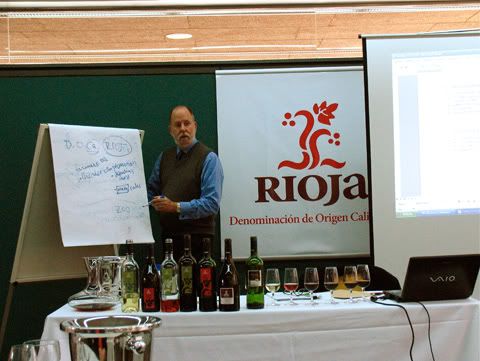
From Bodegas Miguel Torres, we had a very long ride (dinner at a roadside diner) to the Rioja region - Logroño in particular, where we were billeted at the Hotel NH Herencia Rioja (Calle Marqués de Murrieta 14, Logroño, La Rioja). After an early breakfast the 25th March 2010 (well, all breakfasts during the MITYC/ICEX-sponsored week were early for me anyway), we proceeded to the office of the Rioja D.O.Ca. Regulatory Council (Consejo Regulador de la Denominación de Origen Calificada Rioja), where we attended a very clear and concise lecture by Tomas Perry (link to his personal blog), an American who has lived and worked in Rioja for the past 30 years.

From an administrative point of view, the entire Rioja wine region (63, 593 has. of vineyards) is divided into 3 main parts: La Rioja, Alava and Navarre. La Rioja itself is the largest containing 43,885 has. of vineyards and is divided into the Rioja Baja on the eastern side, Rioja Alta on the west with a middle portion dividing the northwestern Rioja Alavesa above it into two separate parts (for more detailed information on the geography, soils and climate, click here).

Though more famous for its tempranillo-dominant reds ("tintos", which are normally blended with small percentages of graciano, garnacha and/or mazuelo), La Rioja also produces increasingly good white wines ("blancos") which are predominantly made of viura grapes, though malvasia de Rioja and garnacha blanca are also permitted, grown and blended (click here for more detailed information on the grape varieties). The tintos are classified into the following categories:

Young wines: Wines in their first or second year (e.g., jovenes, robles), which keep their primary freshness and fruitiness.

Crianzas: Wines which are at least in their third year, having spent a minimum of one year in casks and a few months in the bottle. For white wines, the minimum cask ageing period is 6 months.

Reservas: Selected wines of the best vintages with an excellent potential that have been aged for a minimum of 3 years, with at least one year in casks. For white wines, the minimum ageing period is 2 years, with at least 6 months in casks.

Gran Reservas: Selected wines from exceptional vintages which have spent at least 2 years in oak casks and 3 years in the bottle. For white wines, the minimum ageing period is 4 years, with at least one year in casks. (Click here for more details on the categories.)

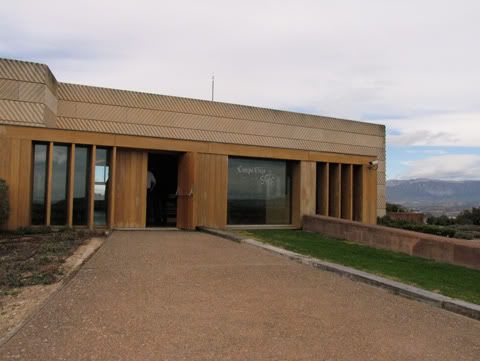
Thereafter, we proceeded to Bodegas Juan Alcorta (owned by the giant Domecq-Pernod Ricard group)...

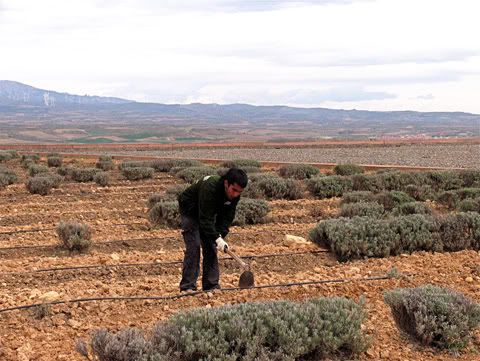
...where a single fellow was working the vines just outside...

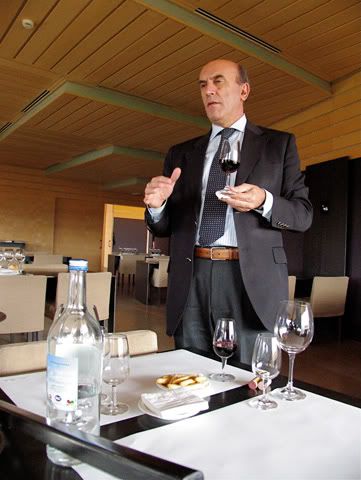
...and were welcomed and toured by the very suave and distinguished-looking Javier Elizalde (International PR Manager).

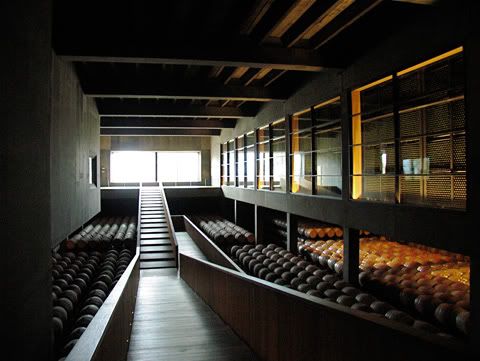
The winery itself is an architectural showcase with its incredibly high ceilings...

...and 20+ foot high wooden doors.

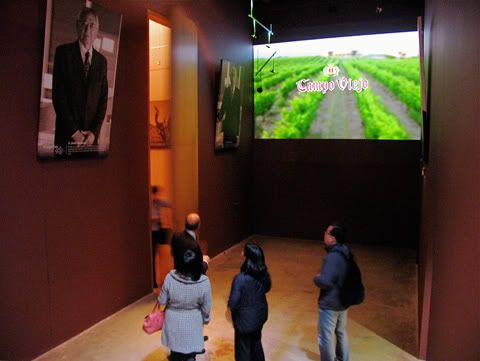
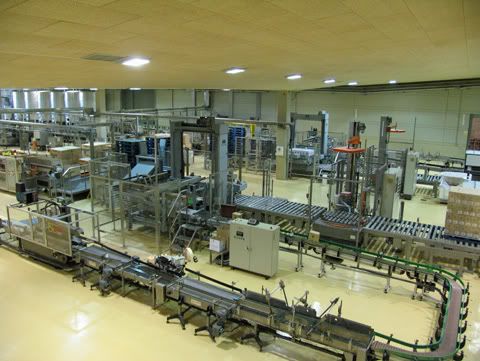
Bodegas Juan Alcorta's flagship winery and brand is Campo Viejo. The winery uses modern techniques and equipment...

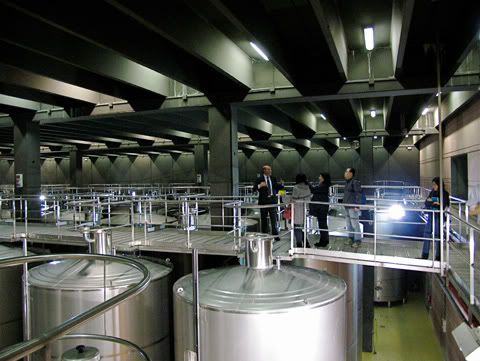
The enormous all-steel vat room that can accommodate millions of litres at any given time.

...with a huge bottling section that, itself, takes only 4 persons at most to operate...

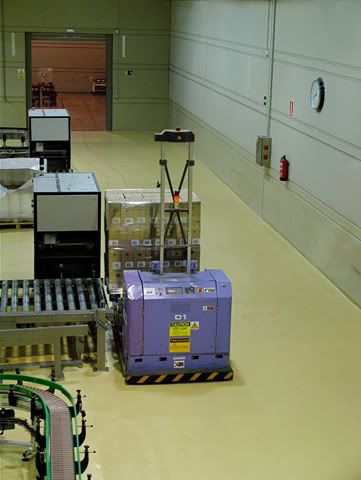
...with the help of little purple-colored robots that carry away and store the crated bottles. The ladies got a big kick out of these little robots since, as they maneuver, they emit a little tune very similar to those made by ice-cream trucks.

Despite all the high-tech modernity, the producers, especially winemaker of Elena Adell (since 1998), make it their mission to express the character and typicity of Rioja in their wines in, among others, using gravity alone to move the wine about, staying with the traditional tempranillo/graciano/mazuelo blend, using much more American oak barrels (70%) than French (30%) and not emphasizing new oak (average barrel age is 7 years).

Of course, we did get to taste the wines for ourselves right before lunch at the winery's own restaurant. Knowing that total annual production hits a staggering 25 Million bottles, 45% of which is exported to 60 countries, I wanted to see for myself how typicity and Riojan character is preserved given such volume.

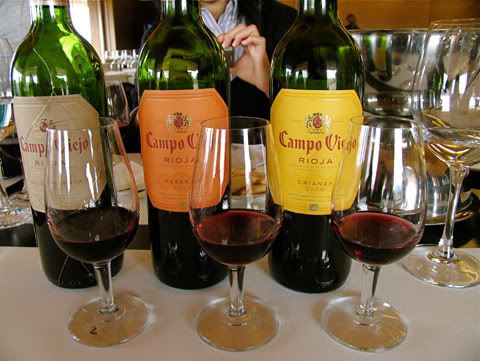
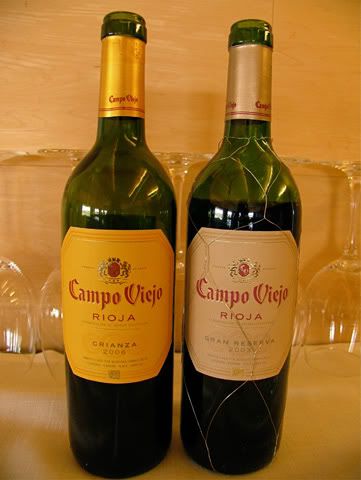
The 3 wines we tried were: 2006 Campo Viejo Crianza, 2005 Campo Viejo Reserva and 2002 Campo Viejo Gran Reserva. I must honestly say that all these wines did, indeed, possess the Riojan character. Even if tasted blind, one could pretty easily detect what they were - I like that in wines. Though the Reserva and Grand Reserva were undoubtedly weightier, deeper and more complex, I recall several sharing my appreciation for the freshness, purity in fruit and vibrancy of the crianza. For their very reasonable prices, They should be ideal for having at home and serving at parties, weddings, corporate functions, etc. Pernod Ricard has a Philippine importer, Pernod Ricard Philippines (Tel No. 632 5566598), but I don't know if they actually bring in Campo Viejo wines.

We all, thereafter, settled down to lunch.

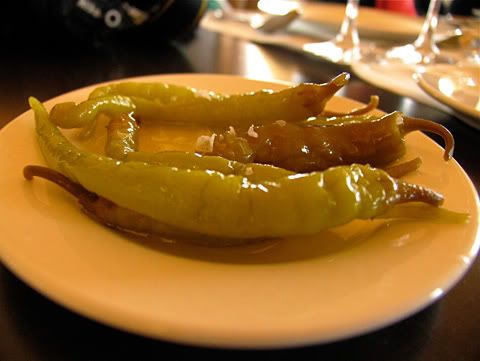
Of course, there is always nice hot bread on the table. This was followed by platters of Guindillas Verdes...

...which I promptly started snacking on.

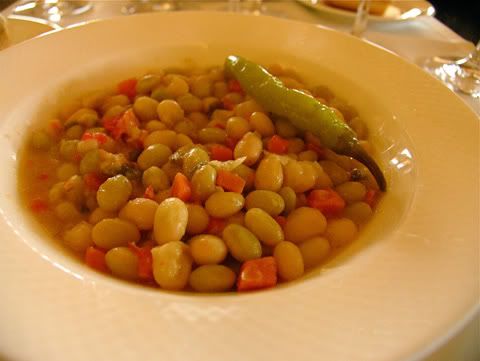
Bowls of Pochas (made from a type of ripe Spanish string beans) then followed, which we topped with some guindillas and I absolutely loved. A hearty dish such as this was most welcome on such a cold and windy day.

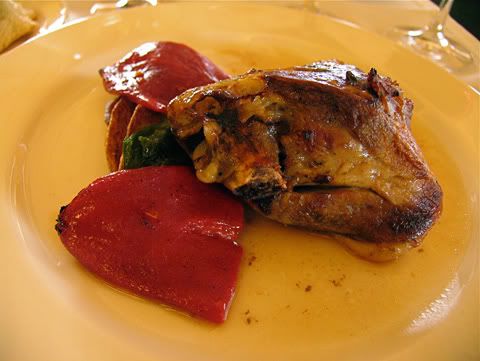
Platters of Cordero Asado con Pimientos del Piquillo were then served. I worried about there being too much to eat, but I wound up cleaning my plate anyway.

Naturally, Campo Viejo tintos flowed freely. As pairings, I had the 2006 Campo Viejo Crianza with the pochas, and the 2002 Campo Viejo Gran Reserva with the cordero. Both were very good eating wines. Actually, even the crianza went well with the lamb and seemed to pick up on the sweetish red peppers.

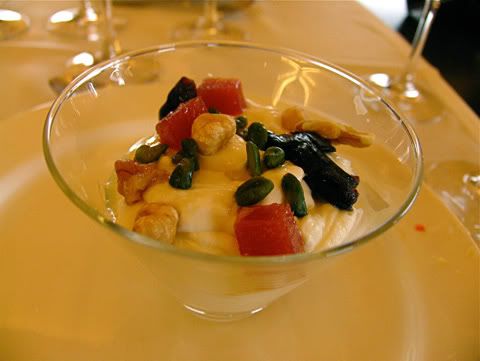
Dessert followed. I can't remember what it is called, but it reminded me of a particularly dense and sweetened type of fromage blanc I had in Gilles Lafontaine's Le St. Etienne Restaurant in Vézelay sans the fruit and nut toppings.

We then proceeded to Bodegas Herederos del Marqués de Riscal in Elciego, Rioja Alavesa.

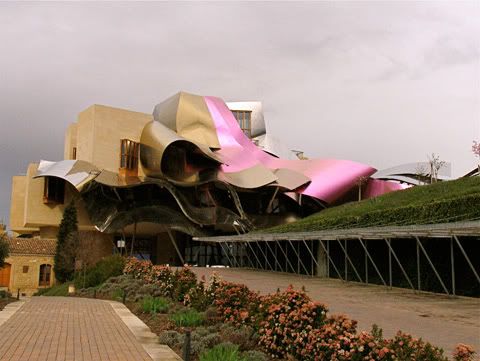
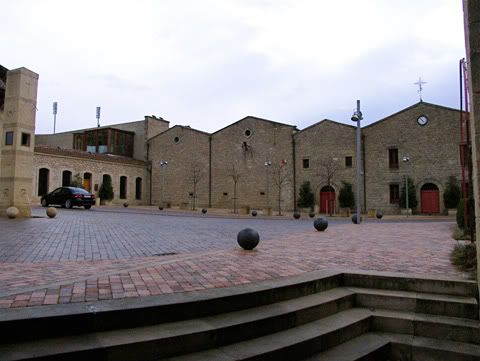
Entering the grounds, one is almost immediately greeted by...

...the famous Marqués de Riscal hotel designed by Frank Gehry.

This visit in particular interested me as there seems to be some confusion in discussions in Manila about what really constitutes traditional and modern Rioja wine vis-a-vis length/intensity of oak ageing and the use of French (vs. American) oak. We were welcomed and toured by the very charming and knowledable Manager of Export Sales, Javier Ybañez Creus. (we swapped some stories and cigarettes walking to the winery itself - him giving me a Spanish Camel in later exchange for one of my USA Marlboros). Where better to get the information than from the pioneers of the Bordeaux methods of wine-making in Rioja?

*The story begins over 150 years ago, in 1858, when Bordeaux-based diplomat/journalist and Elciego vineyard owner Don Guillermo Hurtado de Amézaga, the Marqués de Riscal, was requested by the Diputación Foral de Álava to, on the latter's behalf, identify and engage the services of a wine consultant from Bordeaux to teach Alava winemakers French winemaking techniques. The man chosen was Jean Pineau of Château Lanessan. In the same year, the Marqués imported 9,000 assorted Bordeaux vines, including cabernet sauvignon, merlot, malbec and pinot noir into the Rioja Alavesa.

Things didn't really work out between the local winemakers (who were reluctant to re-learn their craft) and Jean Pineau; so, after 2 years, the Marqués hired the latter's services for the Bodegas Marqués de Riscal. Within 5 years, Pineau's work earned the bodega's wines several international awards, including, in 1895, becoming the first ever non-French wine to be awarded the coveted Diploma of Honour in the XIIIth Bordeaux Exhibition. The rest is (more) history.

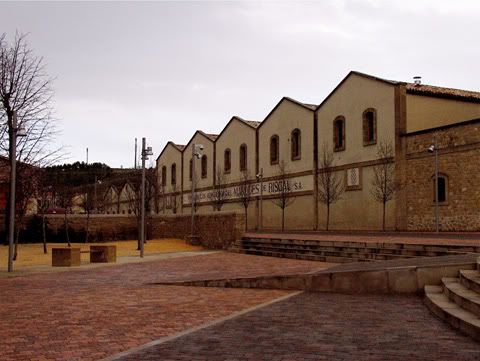
These are the older buildings on the bodega's grounds.

*The information was sourced from Javier Ybañez and Bodegas Marqués de Riscal's official website.

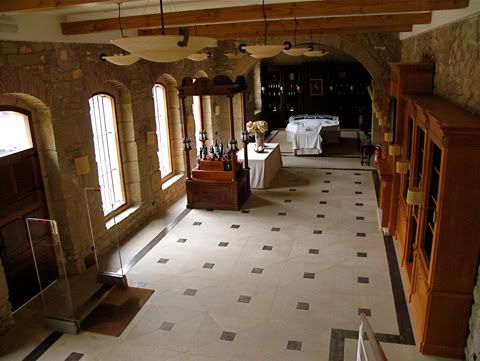
The receiving room where we later on had a very good tasting.

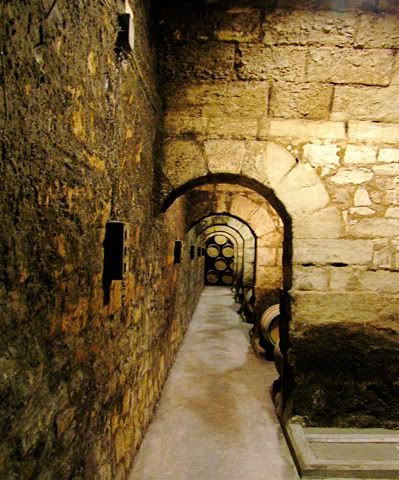
Underground hallways.

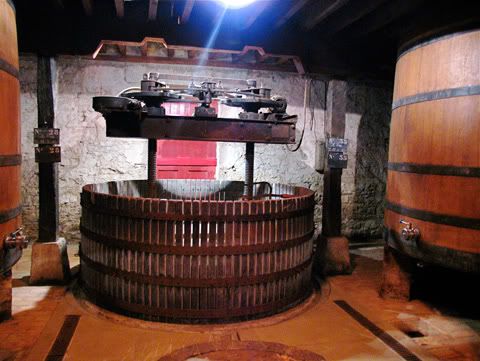
An old wine-press stands at the end of one of the wood vat rooms.

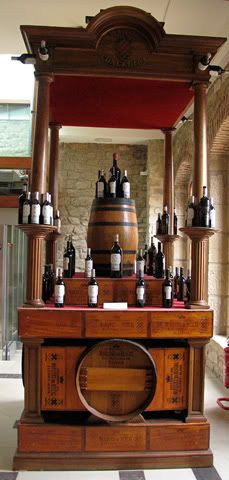
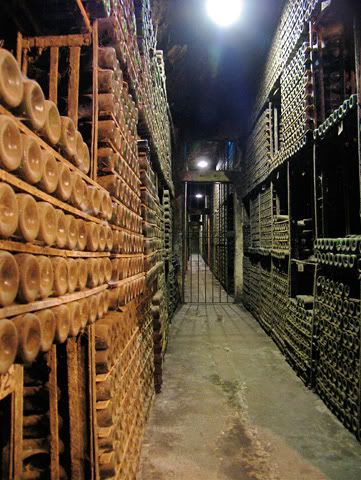
Old vintages sleeping peacefully.

It is rumored that Frank Gehry initially declined Riscal's hotel project, but, after being plied one night with several ancient vintages of their wines, he subsequently relented.

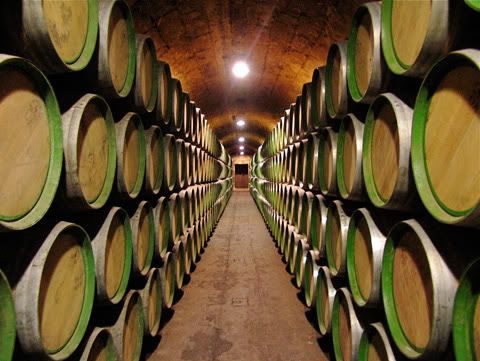
One of the barrel rooms.

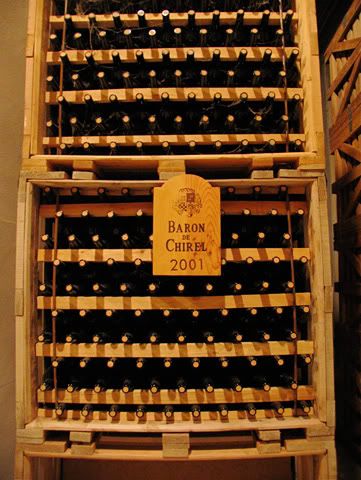
An unreleased batch of 2001 Baron de Chirel - Keiichi-san's wine at our past Una Noche Riojana.

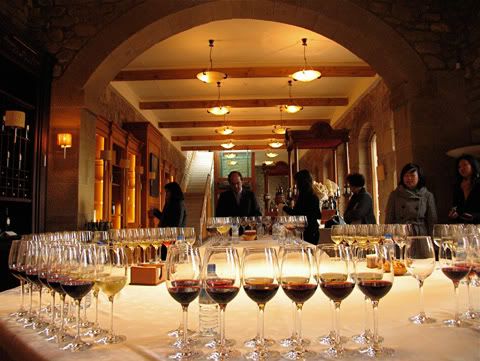
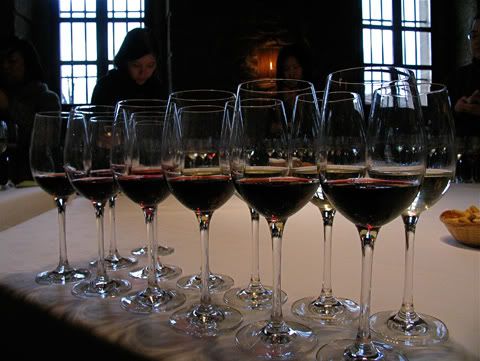
The tasting.

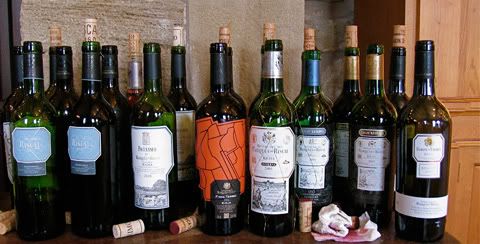
We went through 9 wines in all: 3 whites (all 100% verdejo) and 6 reds, namely:

2009 Marqués de Riscal Rueda Verdejo - This is a decidedly intense, well-ripened and aromatic verdejo blanco - the vintage traits shining through. Picking was earlier than usual due to the August to mid-September heat. From the wine's light, zippy floral freshness, bright acidity and healthy fruit, this would be great as an apéritif (some warm almonds please) and with fresh fish/shellfish dishes simply prepared and some pasta dishes involving the same - spaghetti vongole comes immediately to mind.

2008 Marqués de Riscal Finca Montico - Fruit from a low-yielding, highly vine-stressed single vineyard in Rueda's Montico district; gentle whole cluster pressing, no crushing or de-stemming; 4 months on lees with once-a-week stirring. The wine is bigger, more alcoholic and viscous, heftier, with a touch of creamy leesiness to the peach, pear and unsweetened marzipan notes. The floral and fruit aromas are more intense as well. Still, the freshness is there though and high acidity props the heavier fruit up keeping things very interesting. More of an eating wine than one for apéritifs given its girth. Could pair with richer seafood dishes like lobster thermidor or parmesan baked chicken.

2008 Marqués de Riscal Limousin Cask Fermented Blanco - I believe this is the first oak-aged verdejo I've tried. I've tried a few oak-aged Riojan viura blancos, (e.g., from Marqués de Cáceres and Campillo) but never any Rueda verdejo. There is a pervasive honeyed character to the ripe, somewhat deeply-veined fruit, creamy/toasty vanilla/oak with sweet, whitely floral and faint minerally notes. Definitely a bigger white than Finca Montico, the leesiness of which may lead one to wonder if any oak was seen. In this wine, there can be no doubt at all. For those who favor rich, vanilla/oak-tinged whites.

The Rosado & Tintos.

2008 Marqués de Riscal Rosado - A 100% tempranillo rosado made in through the French saignée method (a.k.a., "cap and drain" where after the "cap" of skins, stems (unless de-stemmed) and pips from crushed grapes has formed above the juice; instead of punching the cap down or pumping the juice over to intensify color/encourage extraction, the juice (pink or rosé) is "bled" (i.e., drained) off and fermented in steel or barrel and the natural grape sugars are allowed to be "eaten up" by the yeast).

Light, crisp, very approachable, dry cherry, strawberry and minor raspberry and red currant notes. Nicely fresh and fruity with good purity - this saw no oak. Dangerously drinkable, I could drink this all day with spicy gulas, gambas al ajillo, chorizos, etc. This would be nice with some paella too.

2007 Riscal 1860 Vino de la Tierra de Castilla y León - This is the first time I've seen and tasted this Riscal bottling. From Toro, it is made up of 85% tempranillo (called tinto de Toro in Toro), the rest of merlot and syrah, aged 6 months in new American oak barriques.

Ripe black cherry, blackberry, raspberry with minor plum, blackcurrant, touches of black pepper wit underlying chocolate. The new American oak is very apparent in the tell-tale coconut cream, cinnamon/toffee notes. Casual, straightforward, readily pleasing, if a bit simple. Will do well for large parties, paired with roasted meats.

2006 Marqués de Riscal Finca Torrea - Fruit-forward, well-ripened, almost confited, round black cherry and raspberry wit mildly toasty oak and related spice notes. Modern and notably mouth-filling, the acid is lowish but the wine still manages good balance.

2005 Marqués de Riscal Reserva - This couldn't have been released too long ago. Though not quite 5 years from vintage and still quite young, balsamic and underlying leather notes already peek through the correctly ripe fruit and oak/baking spice. Admirable balance and finesse here. I love how consistent and distinctive the wines of Riscal are.

2001 Marqués de Riscal Gran Reserva 150 Aniversario - Notable depth, drive and push from the smoothly muscled confited dark fruit, black cherry with juicy blackberry and some blueberry in the finish. Toasty oak notes, spice, hints of balsamico and cedar finely woven in. This will get better and better with age. Despite its heft, it glides on the palate. Nice wine. Get some if you can. I already very much liked the 1998 Marqués de Riscal Gran Reserva paired with steaks at my father's house - but this 2001 was even much better.

2004 Marqués de Riscal Barón de Chirel - I lit up when Javier mentioned we'd be having this. I had mentioned to him before tasting that Victor de la Serna recommended to me the 2001 vintage of Barón de Chirel for Una Noche Riojana Miguel and I organized in Manila a while back. JC de Terry created and personally executed the pairing menu (Javier told me he's spoken to JC on the phone several times but has never met him in person, and Victor happens to be a very good friend of his).

Alongside a powerhouse cast of aged traditional Riojas (e.g., '85 López de Heredia Viña Tondonia Gran Reserva, '85 Marqués de Murrieta Castillo Ygay Gran Reserva Especial, '89 La Rioja Alta Gran Reserva 890, '95 CVNE Imperial Gran Reserva, etc.), the 2001 Marqués de Riscal Barón de Chirel held its own and was pretty much unanimously chosen as the wine with the greatest future and potential.

Full-bodied, concentrated, well-extracted (but not over-the-top), like the 2001, this has an immediately commanding palate presence. Admirable complexity and depth in its layers of black cherry, strawberry, slight raspberry liqueur, balsamico, cedar, bit of crème de cassis, underlying leather, licorice, espresso, cinnamon, nutmeg, vanilla, etc. Again, all this while maintaining precise balance, focus, harmony and grace which I find a consistent trait of Marqués de Riscal's wines. ¡Olé!

In the meantime, platters of jamónes, chorizos, pan, etc. had made their way to the table. I wouldn't have thought I could eat anything even a few hours after our lunch, but I couldn't resist some bites of jamón.

This was one of the highlights of my trip. I do occasionally purchase Marqués de Riscal's wines here in Manila (Terry's Selection is their distributor). I believe I will purchase more.

~ oOo ~

We then made our way back to the hotel in Logroño, I was already dreading the dinner lined up for us that night as I didn't think my stomach could take anything more. It's a good thing dinner starts very late in Spain. A couple of hours or so later, we were walking to the old part of town and entered a small establishment simply named "8-20" (Calle San Agustín 11, Logroño). It is a by-appointment only restaurant and one has to book it for a minimum of 8 to a maximum of 20 persons; hence, its name.

Little did I know that this restaurant is a branch of the brothers Echapresto's highly-acclaimed Venta de Moncalvillo that Oscar Alegre (Export Manager of the Alvaro Palacios group) recommended to me before I left Manila for Spain. I only discovered this connection over a week later when I was back in Logroño with my wife and looking over Oscar's e-mail.

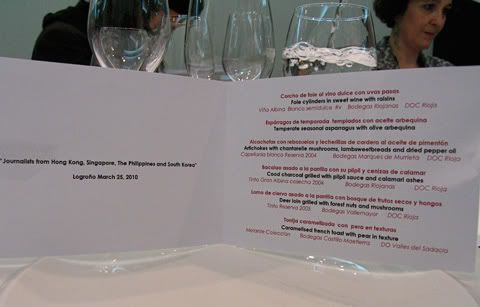
The Menu

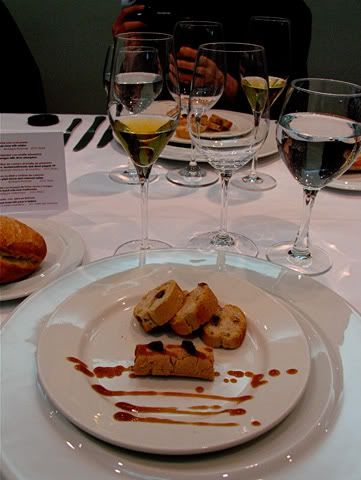
Corcho de Foie al Vino Dulce con Uvas Pasas (Foie Cork in Sweet Wine with Raisins), paired with Bodegas Riojanas Viña Albina Semidulce. The dish was so much more interesting (the chef shaped it into a wine cork) than the semi-sweet wine. Though I like pairing foie dishes with sweetish whites, I personally thought the subject wine was, though pleasant enough, too lackluster and simple - it was overshadowed by the dish - the raisins of which brought all sweetness it needed.

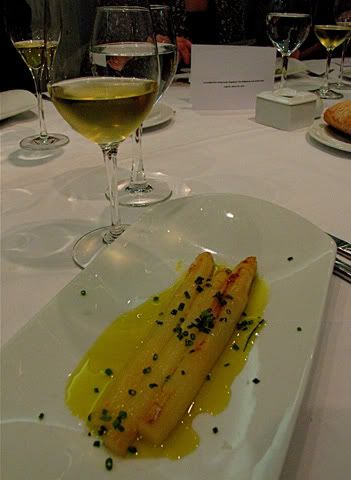
Espárragos de Temporada Templados con Aceite Arbequina (In season Asparagus Flavored with Arbequina Oil - arbequinas are special little olives usually from Catalunya, but also grown in Aragón and Andalucia). No wine paired with this dish.

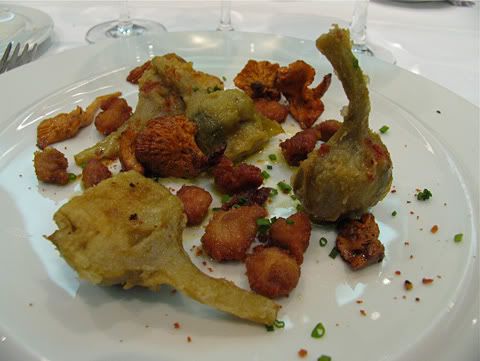
Alcachofas con Rebozuelos y Lecherillas de Cordero al Aceite de Pimentón ([In Season] Artichokes with Chanterelles, Lamb Sweetbreads and Dried Pepper Oil), paired with 2004 Marqués de Murrieta Capellania Blanco Reserva which, as a pairing, honestly, I felt too rich, honeyed and oaky for my taste. The wine is interesting enough (an oak-aged viura), but I would have preferred just a little bit more lift and dryness.

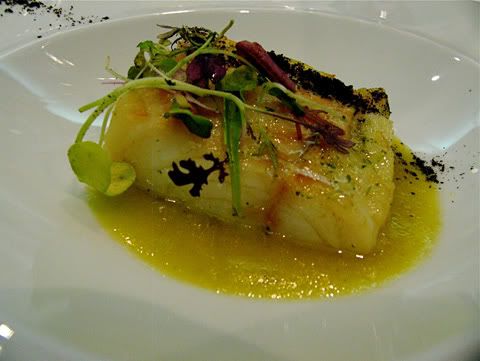
Bacalao Asado a la Parilla con su Pilpil y Cenizas de Calamar (Charcoal Grilled Cod with Pilpil Sauce and Calamari Ashes), paired with...

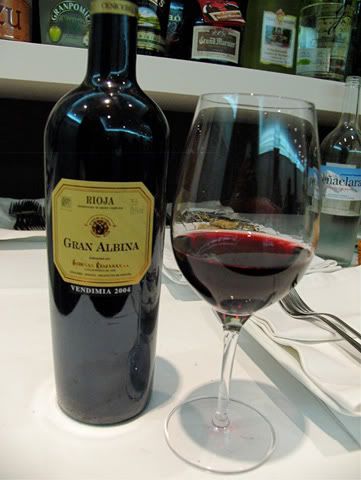
2004 Bodegas Riojanas Tinto Gran Albina Vendimia - I loved the dish and the pairing as well. The wine itself is a bit modern in style, but I liked the contrast brought to the somewhat rustic, "meaty", smoky fish dish. There was a short discussion with the chef about Pilpil sauce (an pan-emulsion of the fish's own juices with olive oil). Of course, I couldn't help but speak up as Javi Lecumberri prepares Kokotxas al Pilpil for us in La Tienda every so often.

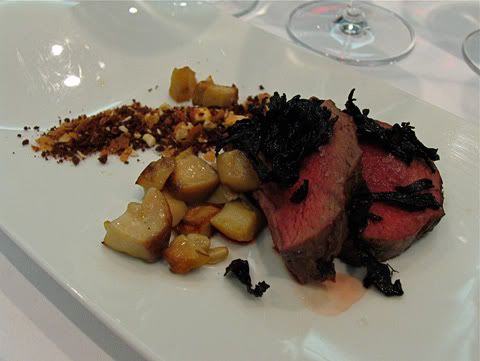
Lomo de Ciervo Asado a la Parilla con Bosque de Frutos Secos y Hongos (Deer Loin Grilled with Forest Nuts and Mushrooms) with which was paired 2005 Bodegas Vallemayor Tinto Reserva - Nice, comfortingly warm, earthy tinto with moderate oak and a friendly feel about it. With touches of tobacco, cedar and spice, it was a very good match with the venison loin and mushrooms. The forest nuts had a sweetish note that, though pleasant in itself, I (and 2 others) felt could have been left out. Still, I enjoyed the dish and the pairing.

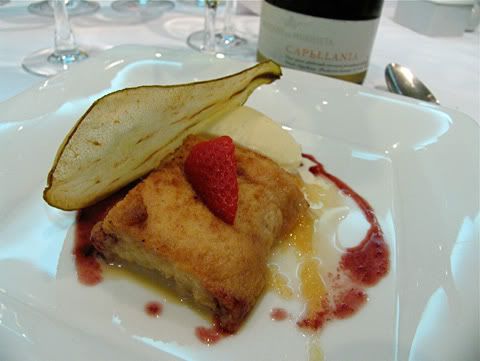
Torrija Caramelizada con Pera en Texturas (Caramelised French Toast with Pear in Texture) with Bodegas Castillo Maetierra Melante Colección (D.O. Valles del Sadacia) - I most always enjoy torrijas, and this was no exception, especially this one accented with fruit compotes. The semi-crispy slice of pear added to the presentation, if not much else. Made with late harvested muscat blanc à petits grains and aged in French oak, this has a lightly spicy-wild honeyed grapiness to it, with vanilla from the oak, of course. Harmonious enough, it has a moderate viscosity and good freshness. "Cute" is how I can describe it. Maybe even "pretty". Won't find any in Manila though, I'd bet.

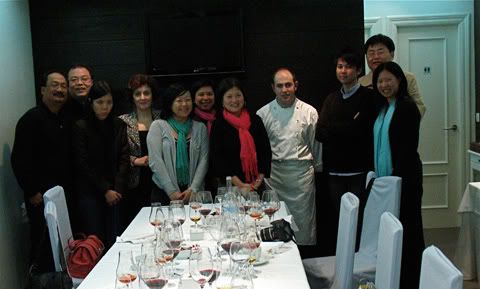
The group with Chef Ignacio Echapresto.

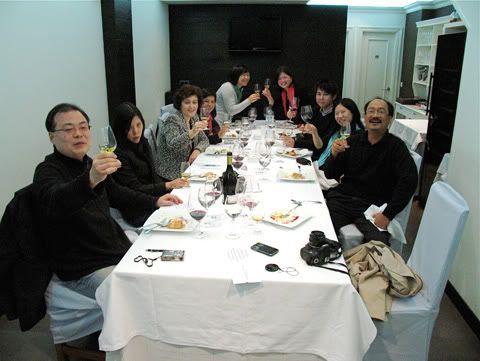
¡Salud!

NB: As to the traditional vs. modern Riojas, let's just say that it depends on what one means by the said terms. If what is "traditional" is taken in its ordinary historical meaning, then Riscal (and the others who eventually followed suit) would fall under "modern" because it is heavily Bordeaux influenced. However, I believe that after over 150 years - Riscal's tintos should already be considered traditional. In my book, anyway.