Tuesday, December 8, 2009

Burgundy Lunch @ Masseto.

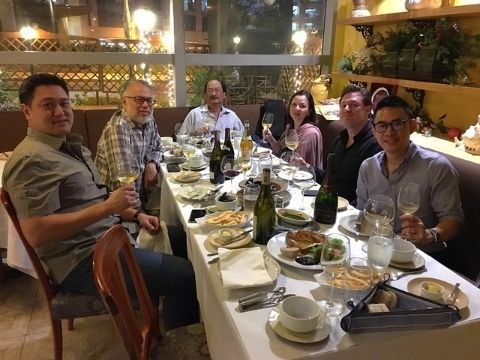
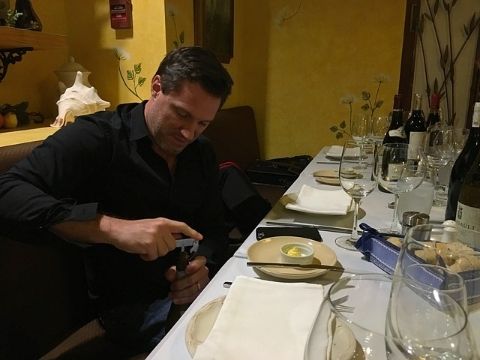
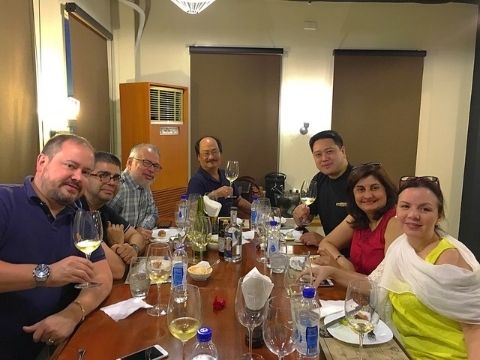
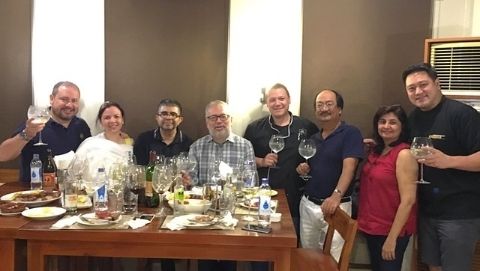
Today's lunch, 8th December 2009, was at the newly-opened Masseto, a plush yet discreet wine bar tucked away at the side of #114 Valero Street, Salcedo Village, Makati. There is no sign indicating its presence, and it seems the owners intend to keep it that way. I'm friends with most all the owners of Masseto, the Stockbroker and Bernie counted amongst them*. This lunch was with the both of them and J-Lab (who was late due to a meeting and traffic). Doc couldn't make it (stuck in the hospital as usual).

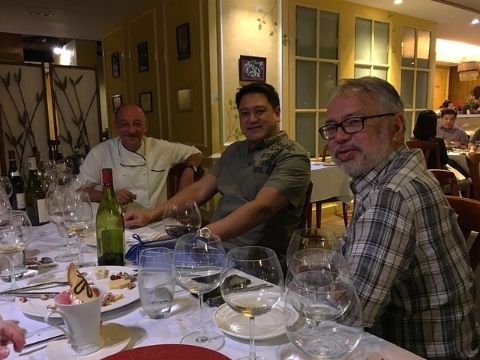
Bernie and the Stockbroker

Refined and elegant interiors by Maja Olivares-Co

This area may be enclosed; ideal for meetings and privacy. It can seat up to 16 persons.

While primarily a wine bar, food is, naturally, served in Masseto - the kitchen ably headed by Tippi Tambunting. I've attended many, and even hosted some, meals by Tippi when she was still in the "private chef" business. Those included many fine wine pairing menus for our Blind Bordeaux Challenges and other winr events. Now, she leads Masseto's kitchen full time as Executive Chef.

Those who were, in the past, unable to engage her services for private dinners, well, as the saying goes, if you snooze....

The menu, as one may easily see, is compact, well-thought out and wine-friendly...

...the items of which shall change every few months.

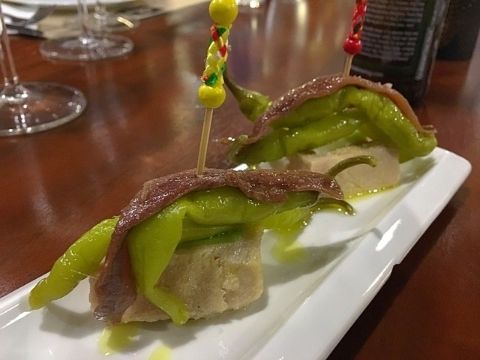
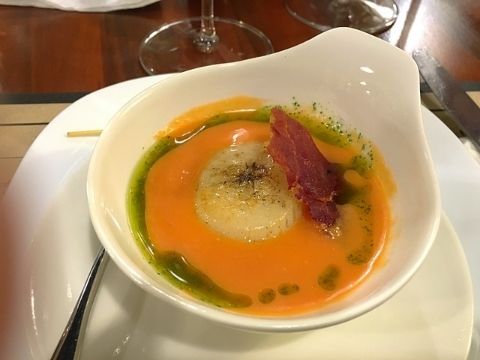
For starters, we shared platters of Sole, Brown Butter Lemon Sauce and French Beans...

...Goat Cheese Ravioli with Olive Butter and Bacalao Fritters Aïoli, enjoyed with...

2002 Domaine William Fèvre Chablis Grand Cru Bougros - The Stockbroker's bottle. Situated beneath the Preuses vineyards, bordered by the river Serein, the wine from the 12.6 hectare grand cru Bougros tend to be fatter, rounder, at times tropical, and generally show earlier than other Chablis grands crus. This, when first poured was leanish and exhibited clean, bright notes of calamansi (i.e., a small, green citrus fruit also known as "Philippine lime") over cold, steel, wet stone and oak/vanilla. With added aeration and warming, its grand cru heft came to bear with round, softer, moderately buttery, somewhat pillowy and creamy apple, pear, bit of melon, citrus, white minerality, bit of flint and a notable dose of oak.

I liked this best with the sole as its butter-lemon sauce played nicely with the citrus notes and buttery character of the wine's fruit.

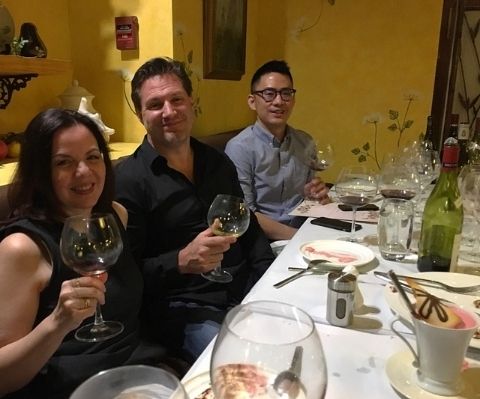
J-Lab then arrived and the reds began to pour.

It's not everyday one gets served at a posh CBD wine bar by one of the owners, albeit he be a good friend - so I enjoyed it while I could. I noted that the long black sofa behind J-Lab is pure, real-deal leather - absolutely no cheap-o, faux leather/leatherette for this wine bar. No, sir.

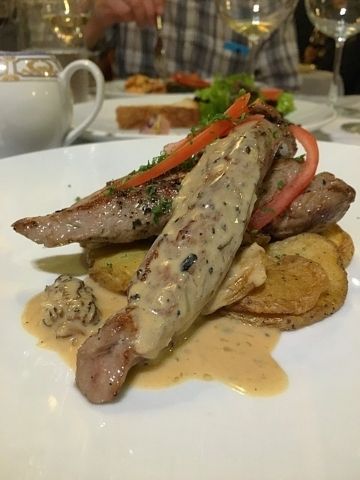
With my main course of Crispy Duck Leg (Confit) with Roasted Potatoes...

...I enjoyed a pair of grand cru red Burgundies from 1996.

1996 Domaine Armand Rousseau Ruchottes-Chambertin Grand Cru Clos des Ruchottes - Bernie's bottle, from the slightly over 3 hectare northwestern climat of Ruchottes-Chambertin (bisected by a narrow road into Ruchottes du Dusses and Ruchottes du Bas), abutting the western portion of Mazis-Chambertin (i.e., Les Mazis-Haut). I understand that the Clos des Ruchottes is a monopole of Domaine Armand Rousseau (I don't know how large a clos it is though).

This wine, though soft in fruit and well concentrated (typical earthy cherry, raspberry, underlying dark plum, old violets, a hint of Burgundy decay, dark spice - with a general resiny/sappy slant), had an evidently sturdy structure and acidity that jutted out noticeably. Its grip was also quite firm, to a point that it felt a bit uncomfortable. It came off as quite rustic to me - but in a charming manner - unlike many (sometimes overly) polished red Burgs I've encountered over the past 4 years. Its extremely subtle oak/wood notes are very submerged - I highly doubt much new oak was used in this (a good thing for me).

As it sat in the glass, its acidity became even more apparent and, within the fruit, emerged sour cherry and slight preserved Chinese tamarind notes (a.k.a., champuy) that followed through the finish. Somehow, judging from this bottle, I think the acids and tannin will far outlive the fruit. I appreciate, though, the opportunity to try a grand cru from this famous producer (the grands crus of which are quite rarified, to say the least).

1996 Domaine Ponsot Clos de la Roche Grand Cru Vieilles Vignes - The Stockbroker's bottle, from Morey-St-Denis' most famed clos, central-north in said the commune, abutting Gevrey-Chambertin. The Stockbroker said it had a bit of a musty scent to it, but I didn't notice that (I was using a huge bowl of a glass that I found difficult to sniff in). Very soft, barely medium-bodied, I, honestly couldn't get very much from it - certainly not the weight, stuffing or push expected from a grand cru of Morey-St-Denis, much less a Clos de la Roche. It was pleasant enough, though, don't get me wrong - it's just I expected much more.

A slightly damaged bottle? Perhaps - but still pleasant enough and charming - nothing bothersome except that it wasn't as hefty or full as I expected, being what it is, of course. Again, however, I greatly appreciate the opportunity to try this wine and the fact that a friend chose to share it with me.

Nothing to worry, though, all these bottles are from the Stockbroker's and Bernie's personal collections and are not offered for sale in Masseto. From the bottles of California wines I saw available, there will certainly be no lack in hefty, powerful reds on the wine list.

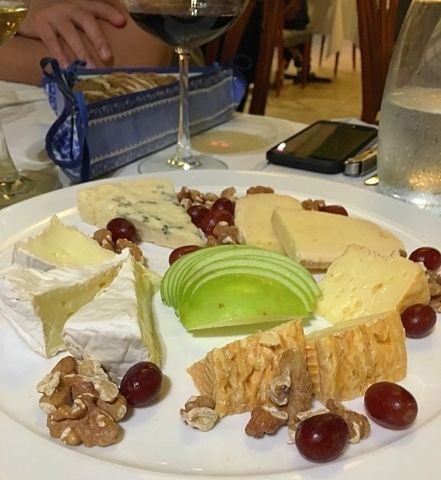
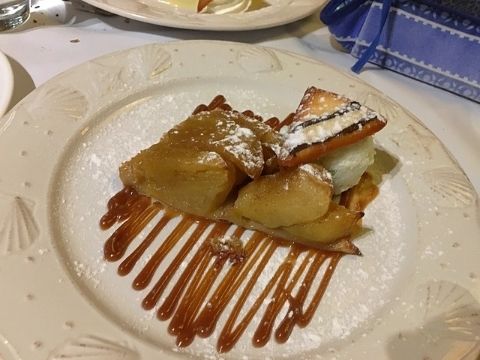
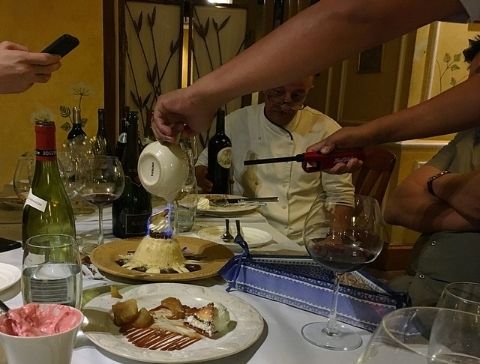
For dessert, we had...

2005 Dönnhoff Niederhäuser Hermannshöhle Riesling Auslese - The Stockbroker's bottle, one I've had from him 3 months before, during his Chinese lunch at the Summer Palace in early September 2009. My notes then are still applicable:

Bright, lively and playful. Lightly dancing on the palate with lifting acidity and minerality to its sweet peach, light honey, pear and candied lemon. Great purity and focus. Excellent sweet wine. No doubt about it.

Many thanks, my friends for sharing your wines and company; and congratulations on the new venture. Hail Masseto, long may she live!

*I am in no way connected with Masseto and receive/accept no remuneration of any sort for posting on it. I paid for my lunch, we all did, and, though the wines were from Bernie and the Stockbroker, we are all friends and always share wines with each other - as my numerous entries easily and clearly bear out.

Sunday, December 6, 2009

Christmas Dinner with Former Forum Mates.

Dinner this Saturday, the 5th December 2009, was nearby at Boozze and Margarita's place - the Christmas dinner of my former EO Forum (an association of entrepreneurs I used to belong to). Except for Boozze (who, like me, is part of the Alabang group), the Vigneron and, occasionally, Santi, I don't often see the fellows, much less their wives these days, so this was a very nice opportunity to catch up. My wife had a function to attend with her family, so I attended alone.

The Ladies: Lisa, Pam, Maite, Margarita and Dorothy (Tisha arrived later)

Some of the Guys: Berck, Santi, Joey, Geopie...

Berck and Don

As regular readers know, Boozze is the Alabang group's grillmaster, so, unsurprisingly, dinner featured thick slabs of dry-aged US Certified Angus rib-eye steaks - hickory-seared then oven-roasted.

Lined up and ready for the grill

In the meantime, we chatted and had some blancos with pica-picas. It didn't take long, though, before Boozze called us into the dining room.

The Table

The Anticip..........ation

The Food

Margarita's Salad of Baby Arugula, Gorgonzola, Dates & Walnuts - I had a second serving of this

Paella de Hongos y Espárragos

Chili-Garlic Prawns (I made this old family favorite per Boozze's request)

Guilt-supressing Haricots Verts

Hickory Smoke/Seared, Dry-Aged Certified US Angus Rib-Eyes

Boozze carved up some for the ladies in accordance with each's preferred level of doneness. Me, of course I went for the rarest one possible. It's been several years since I could finish a whole steak of this size, so I prudently just took a third of one.

The younger fellows, however, had at whole slabs with gleeful abandon. Berck, on the right, imagined he could finish off his chosen slab alone, but wound up sharing part of it with Lisa.

Don and Santi also attacked a full slab each, but, to the best of my knowledge, only Don managed to finish his all by his lonesome. Santi, valiantly though did he try, eventually shared a bit of his with Maite.

The Wines

I brought a bottle each of 2007 Laxas Albariño and 2008 Bodegas Itsas Mendi Nº7 Txakoli to go with my chili-garlic prawns, as, knowing Boozze, Santi and Don, I figured there would already be more than enough Napa cab and Bordeaux rouge on deck. I wasn't wrong. Since I've written about these two favored Spanish whites so many times, I will forego repeating myself - mentioning only that the bright, dry, fruitier-styled ItsasMendi Nº7 Txakoli, I found, paired well with my prawns.

As the steaks were served, Boozze asked me what would best go. Since I love Tuscan and Piedmontese reds with grilled red meats, I, naturally pointed out the Barolo.

2001 Azienda Agricola Falletto di Bruno Giacosa Barolo - Don's bottle. This is a single vineyard Barolo (from the 14.5 hectare Falletto vineyard in the commune of Serralunga d'Alba, within the Barolo DOCG; the former wholly owned by Bruno Giacosa). As most everyone knows, 2001 was an excellent year for Barolo and Giacosa is deservedly reputed to be one of the most traditional, old-school producers of Barolo. How could I not have picked out this wine for the steak?

Popped-and-poured, with a bit of coaxing, the wine readily gave up its typical aromas of spicy balsamico, dried violets, tar, black olives, with a minty topnote. Still quite young, it has yet to show earthier scents of truffles and mushrooms - yet, the nose is, to me, already alluring. In the mouth, it mirrors the nose in its masculine, very clean, pure, focused and admirably structured, medium body. A sheer yet sturdy silk of Barolo goodness, it cut through the steak's richness with ease, while enhancing the meaty flavors and cleansing the palate. Excellent alone; excellent with the steak.

Next opened was another no-brainer choice for me...

1989 Château Cos d'Estournel - Again, Don's bottle, purchased for him by Dorothy during a recent trip to Hong Kong. I know I've had this not too long ago, but, this being my second post today, I can no longer find the strength to "dig" through my previous notes for comparison.

Cos d'Estournel is one of the favorite producers of the Grand Crew, the former's wine winning every single time it has been entered in our Blind Bordeaux Challenges, (i.e., vintages 1986, 1990 and 1996). Deeper, more classically structured and cut than the '90 and not as lushly ripe-fruited or extracted. Not as flambuoyant as the 1996 at this point, it is, to my mind, more similar to the serious, masculine 1986 yet not quite as stern.

Comfortingly warm, familiar, deep, moderately broad and concentrated, and alluringly complex layers of blackcurrant, cassis, plum, cherry, dark raspberry, cedar, violets, underlying dark chocolate and, with more aeration, added whispers of Indian spice, I couldn't help loving this. I, personally, do prefer '89s to '90s when it comes to fine Bordeaux (nb: I didn't vote for the 1990 Cos when it won at our Blind Bordeaux Challenge XI). Excellent, old-school Cos d'Estournel.

Later in the evening, after dessert and amidst a slew of stories about our children, we opened another Médoc...

2002 Château Malescot-St-Exupery - Santi's bottle. I've had this same wine once before - from Rene at Sunshine and Rob's Gourmandise dinner on the 24th January 2009. I'm pretty sure Santi bought this together with Rene. My notes then were as follows:

The wine itself put on a good show considering the vintage (the Stockbroker told me before that 2002s are currently the French's red wines of choice for serving), presenting cassis, dark plum, dark cherry and raspberry, minerals, bit of violets, cedar and toasty/spicy oak profiles. Nice balance and depth to it. Medium bodied, and good structure. There is a slight hint of greenness to the fruit, but, in all, quite enjoyable.

I add now that this bottle was more open, extracted and showed touches of leather and a rusticity I did not before note. More evidently, it showed a lot of more underlying dark minerality and an infusion of iron and warm asphalt. The slight greenness of the fruit is still there - but that's likely the vintage showing. A masculine Margaux.

Dessert was, well, indulgent, and I had a lot of it.

Margarita's Homemade Mascarpone-Filled Profiteroles with Macerated Berries

Delize Macadamia Sans Rival (by Jill Sandique), of which I had 2 servings

Extra profiteroles for those who cared - I did.

A double espresso and a few more profiteroles later, we all took our repective leaves, gifts given and many thanks made for a wonderful dinner. I'm very happy and, admittedly, a bit touched that my former forum mates still invite me to their dinners.

Thanks, guys, I really appreciate the invitation and greatly enjoyed myself. See you all again soon, and have a merry Christmas. Oh, and thanks to Berck for correcting the settings on my camera. Big help, buddy!

Veuve Clicquot Dinner + (Mostly) Bordeaux Reds.

Dinner Wednesday, 2nd December 2009, was at RED for a special menu featuring Champagne Veuve Clicquot Ponsardin. The Stockbroker organized a long table of friends for the evening.


The Stockbroker, Kim Atienza, my wife & I, and her & Mrs. Doc


Barbara Aboitiz & the Vigneron, Bernie Sim & the Doc, Lucy Sim & Felicia Atienza


Feli & Mrs. Vigneron, Miguel Aboitiz & Uncle David Lim, Arnie del Rosario & Greg Clavano

Naturally, we brought our own bottles of reds for the evening, mostly Bordeaux, which ever-reliable Ace, RED's sommelier, expertly prepared for us.

For cocktails/canapés and the initial course involving smoked salmon,...

...we had the Veuve Clicquot Ponsardin Non-Vintage Brut (a.k.a., "Yellow Label") - This is the house's basic, signature non-vintage champagne - one of the more popular non-vintage bubblies served in Manila. I have found this consistently fresh, crisp, zesty and bright with telltale rounded lemony slant and slight floral and bready notes on a svelte, lightish-to-medium body.

Thereafter, with a bit of seared foie gras...

2002 Veuve Clicquot Ponsardin "Vintage Rich" - The materially higher dosage of this vintage bottling makes it evidently sweeter and more complex than the brut, and, as such, a logical bubbly pairing with foie gras. There is more heft and a more rounded, creamy mouthfeel to this (with a more pronounced middle compared to the basic Yellow Label) with almond paste and white chocolate notes that indicate a good amount of fine pinot noir. Quite nice.

The soup course was a reasonably good pumpkin soup. I noted that this was not overly rich or creamy like many othe versions; it had a nice clean, gracefulness to it. Nice enough.

Next was an earthy, mushroom-laced risotto. I and the Stockbroker noted that ours were a bit too al dente, but the flavors were, nonetheless, very good. Though many reds were already opened, I paired this with...

1999 Louis Jadot Corton-Pougets Grand Cru - My bottle, one I've had a few times, the first being from Vancouver Vince during a post-golf dinner at the house back on the 13th May 2009. Although I've had this wine a few times since, my last written notes were from the 25th June 2009 at Sala* :

...My previous notes, still applicable, were as follows:

From Jadot's own south-eastern exposed vineyard situated on the Rognon de Corton (literally, the "Corton kidney"), just below the vineyards of Corton-Charlemagne.

A bit reticent, initially, after around 15 minutes in the glass, this attractive dark red wine started opening up with sweetly-spiced raspberry, cherry and fine cedar - eventually developing into a nicely perfumed bouquet.This wine was alluringly, seductively feminine in character, with very notable finesse - from the attack to finish, there is definitiveness, but elegantly understated. In the mouth, notes of dried cranberry, red beet and a whisper of violets are intricately intertwined with the mirrored sweetly spiced red fruit/berry aromas - making for a very enjoyable wine indeed.

I can add now, since the wine had more aeration in bottle and glass this time, that it exhibited more openly the power, breadth, body and push expected of grand cru status and more depth in its deep, pure and well-defined cherry and raspberry flavors - but all in a polished and poised manner.


*nb: With a bottle I opened on the 27th August 2009, I noted that the cherry/raspberry were obviously tarter and not as sweetly spiced than the previous two bottles and the bouquet took a longer time to display (around 35-40 minutes), whereas the other bottles displayed almost immediately after being popped and poured.

The main course of steak; excellent quality beef; which everyone enjoyed. It was paired with...

2002 Veuve Clicquot Ponsardin Champagne Rosé - I last had this at Doc's advanced birthday dinner early September 2009. My notes were as follows:

2002 Veuve Clicquot Ponsardin Champagne Rosé - Nicely structured, openly displaying dominant flavors of wild strawberry with a bit of citrus and raspberry, floral topnotes and underlying brioche, coffee nuance (past mid-mouth and towards the back) and just a whisper of yeastiness in the finish. Lively yet with good depth. I'm no champagne expert, far from it, but I imagine this will gain added complexity and depth with, say, 3 more years.

With the steak, it was, in all honesty, a barely acceptable pairing for me. I've, in the past, attended a few all champagne pairing events and one I recall paired a similarly young rosé from Champagne Ruinart with roast lamb loin. It was a novel way to have bubbly for me, and I can see why some like pairing rosé champagne with such meat courses, but I, personally, do not see the allure.

Thus, after a couple of experimantal sips with the steak, I enjoyed the rest of this bubbly alone, using it as a palate-primer for the rest of the reds.

There were a lot of reds opened that night, but I don't think I got to ty them all. My notes on the others I did have are as follows:

2000 Le Petit Cheval - Doc's bottle. I tried this strong vintage 2nd wine of Château Cheval Blanc in early September 2006 from Bernie when I bumped into him at Je Suis Gourmand. We were having dinner with our respective families; I sent him a glass of 2004 Château de Puligny Montrachet's Puligny Montrachet 1er Cru Folatières I was trying out (to see if I should buy more - and I did) and he sent me a glass of this. I didn't write any notes about it, unfortunately, but I do recall clearly that it was very concentrated, opulent, rich, meaty (hefty doses of espresso, leather and a bit of animal) and definitely full-bodied. Thus, it was great to try it again over 3 years later.

Now, it is notably more calm though still notably concentrated and rich - especially for a 2nd wine. Very ripe plum, cherry/kirsch, chocolate, espresso, dark spice, bit of leather, no more animal. Quietly full-bodied, absolutely no angles, velveteen in texture. This still needs a few years to come together more, but all the materials appear to be there for a most excellent wine. This was my favorite wine of the night.

My next favorite wine of the night (together with my '99 Corton-Pougets) was the Stockbroker's...

1986 Château Lagrange (in Magnum) - The Stockbroker's bottle. I've had this a few times before but never in magnum, having opened a few bottles in 2007 - one of which I entered in our Blind Bordeaux Challenge VII (where it landed in 3rd place; and I opened another bottle at a farewell dinner for Franck and Françoise Alby a week or so later). My notes at the mentioned Challenge were as follows:

Wine#3 - Nose took longest to open up and show bottle age sweetened blackcurrants/cassis, vaguely smoky cedar, mild dark spice and a bit of toasty oak. Confidently medium-bodied, nice structure in middle, the longest, most confident finish, you could feel the tannins through though.

The magnum tasted fresher than I recall (those in larger formats tend to age more gracefully after all) and seemed heftier and deeper as well. The above noted flavors are consistent, but with discreet, dark gravelly and tar undertones from the subject magnum. Serenely masculine.

The 2001 Château Gloria (Magnum) , was ok but was hopelessly overshadowed by the other reds. Its warm, typical St-Julien harmony was not enough to stand out. It's tannins were also a bit hard.

There was also a bottle of Château Chasse-Spleen, the vintage of which escapes me, which seemed slightly corked/damaged so I dumped it after a sip.

I wasn't able to take a photo of the 1996 Château Léoville Poyferré, which I believe was Uncle David's. This has been on my list of favorite, excellent value reds ever since I first tried it from the Doc at a dinner at home sometime in 2006. I bought and consumed several bottles since then, even entering one as a dark horse in our Blind Bordeaux Challenge VI where it, tragically, landed in 4th place.

Previous bottles were concentrated and notably extracted, with a distinctive meaty-gaminess to the molten dark, fig, leather, vanilla, chocolate, gravel/minerals, violets and cedar. Now, it is calmer and not as overtly lush and chocolatey/oaky as before. It is coming along very nicely and has many more years to evolve.

The surprise of the evening for me was the...

2003 Château d'Issan - I'm not sure who brought this bottle, probably the Doc since he mentioned he had some bottles of this, or maybe the Vigneron as Emmanuel Cruse is a good friend of his. I am somewhat familiar with this 3rd growth from Margaux, having tried quite a few of their vintages. I am also very fortunate to have attended a dinner at the château as on 20th June of 2007.

The last time I had a 6-year-old d'Issan was over dinner at home with my wife, brother and sis-in-law on the 1st November 2007 - it was vintage 2001 that I decanted 4 hours before serving. It finally opened up beautifully after an additional 45 minutes-1hour breathing and we greatly enjoyed it - my brother, in particular, noting how good it was. Remembering this, I didn't expect too much as the subject 2003 was popped-and-poured.

To my surprise, this seemed quite good to go, showing polished, ripe cherry/raspberry over slightly earthy cassis, ripe plum, cedar, violets and a touch of licorice. Acidity just adequate and I'm no fan of 2003 Bordeaux in general, but I and others found this very nice. There were other 2003 Médocs opened that night, but this was definitely the best/most ready/most approachable of them.

Dessert was eventually served - a quartet of goodies featuring berries, a mousse, a nice chocolate cannoli-esque cylinder and an indulgently rich dark chocolate torte which I ate with the berries.

After rounds of coffee and double espressos, most everyone trickled out leaving my wife and I to linger with the Stockbroker, Greg and Arnie. Over a few jokes and stories, I had 2 more wines: 2003 Château Haut-Bailly which I failed to photograph (and I never found out whose bottle this was); and...

2003 Château Talbot - Greg's bottle, popped-and-poured. Though still exceedingly young and tannic, I found this much more open than the 2003 Château Haut-Bailly (the latter a favored château of mine from Pessac-Léognan, which, together with Domaine de Chevalier, I consider great value for money from the appellation). Though still a little tight and restrained at this point, the 2003 Talbot showed off admirable structure and acid balance for the vintage (another notable in this regard is the 2003 Gruaud Larose) in its sleek, herb-flecked, roasted-ripe cherry/raspberry over cassis, sweetish cedar. The tannins are a bit rough and drying on the finish, but that's most likely its youth - nothing around 4-5 more years ageing shouldn't fix.

The 2003 Haut-Bailly, honestly was far too young, tight and closed for me to make a good assessment - though I did note typical dried herbs, violets and "tar" notes to its black fruit. At this point, the 2003 Talbot was easily more enjoyable for me.

Excellent evening all around with good food, lots of fine wine and good friends. Everyone should have dinners like this all the time. Thanks to all, especially the Stockbroker for spearheading attendance to this event and organizing our table. Until the next!

Friday, December 4, 2009

Pre-Xmas Lunch 2009 at La Tienda.

This past Tuesday lunch was with the Usual Suspects at La Tienda. Naturally, Miguel coordinated with Javi for the all the arrangements and the menu as well. Old favorites were on order plus a few new tapas as well. We were to be 8 in all; Mig, Rene and J-Lab were already there when I arrived...

...so we stated off with a bottle of...

2006 Celler Capçanes Mas Donís Rosat - I think Rene brought this, it's available at Premium Wine Exchange. From D.O. Montsant, a notably dry, predominantly grenache (80% + syrah and merlot) rosat/rosado. This is relatively hefty for a rosado, firm in its strawberry, raspberry, cherry flavors with a hint of underlying black currant.

Golf buddies Quito Moras, Henry Hagedorn, Jos Moraza and their friends happened to be there for lunch too (in the room beside ours) so I sent them a bottle of another relatively hefty Eté de Mondot Rosé par Christine Valette (a rounder/plummy rosé due to more merlot). These heftier kinds of rosé are good for lunch - inherently versatile, they go well with both luncheon tapas and main courses.

We had a good number of bubbly, whites and rosado to choose from.

When the others trickled in, we moved to a bit of fine cava...

Freixenet Reserva Real Cava Brut - Aaron's bottle, obviously, as his family's ADP Enterprises represents the huge Spanish Freixenet group in the Philippines. Bright, clean, dry, fresh, mild white grapefruit and citrus fruits with nuances of straw and white minerality. No angles, persistent bubbles and an effusively frothy middle. Quite refreshing and a very nice palate-primer, it is notably rounder and with more palate-presence than any other cava I have had. Good show.

With some of the chorizos curados, we also had some...

Bodegas Hidalgo Pastrana Single Vineyard Manzanilla Pasada - J-Lab's bottle, one we enjoyed over lunch at La Tienda last 24th June 2009 to test some kokotxas de bacalao al pilpil with txakolí. Then as now:

Bodegas Hidalgo Pastrana Single Vineyard Manzanilla Pasada - J-Lab's bottle; from the village of Sanlúcar de Barrameda along the Costa de la Luz, in the Anadalucian province of Cadiz in southern Spain. This 217 year-old bodega's holdings span 200 hectares planted to vine, with some reaching 80 years of age. "Pastrana" is the name of the particular vineyard wherefrom the fruit to make this wine is harvested.

According to Miguel, this is the typical drink enjoyed in Spain, after work, before dinner, at a tapas bar, with some olives and slices of chorizo.It struck me as a rather light type of sherry, quite nicely dry, with a subtle, vaguely rosted-nutty character with faint wood notes. Smooth and comfortingly warm on the palate. I could easily get into this pairing with tapas.

The Stockbroker arrived and we were then complete...

...so the tapas started to make their way to the table and whites began to pour. With the opening salvo of my favorite escalivadas (no meal in La Tienda is complete for me without this appetizer)...

2008 Naia Rueda Verdejo - Miguel's bottle, one he brought home from his most recent trip to Spain. Attractive with a nice nose that reminded me of honeysuckle over peach and green apple with a touch of freshly-cut, dewy grass, it was vibrantly mirrored on the mouth with white grapefruit hints. Fruitier middle than other Rueda verdejos I've tried. Very nice indeed, I really liked this and got several pours.

Attack!!!

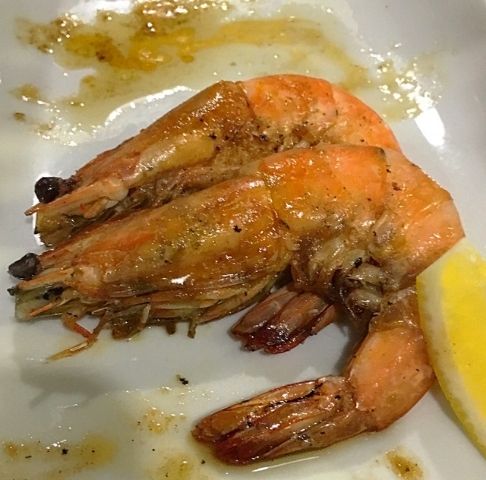
Gambas a la Plancha

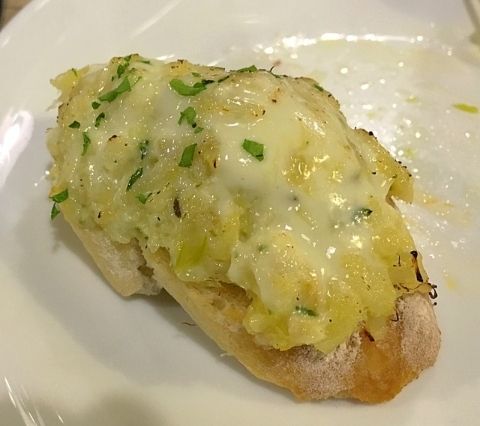
Brandada de Bacalao

Huevos Estrellados à la Casa Lucio

Calamares à la Plancha con Cebolla

All the dishes were incredibly good, the brandada de bacalao and calamares à la plancha con cebolla being standouts, as well as the comforting huevos à la Casa Lucio. Everyone was jockeying for more, jokingly debating on who already got more than his share of what.

Order was restored, however, when Javi came out to see how we were doing and shared a quick glass with us.

In the meantime, we got to try something completely different...

2007 Marufuji Rubaiyat Kôshu Barrel Aged - Keiichi's bottle of course, according to him, the kôshu grape has been vinified in Japan for around 150 years but it was relatively recently that they started oak-ageing these wines. Light on the palate, quite dry, its very mild, somewhat linear white grapefruit/white mineral and citrus notes (whisper of lime) made it very food-friendly - lifting and giving the caramelized onion-stuffed squid center stage.

We also got to have a new albariño...

2005 Pazo Piniero de Lusco Albarino - Aaron's bottle, but I am not sure if they are distributing this or it is from his personal stash. Per Miguel, this "is a selection of grapes from the oldest and steepest section of the vineyard to provide superior terroir character. It was also good, although it lacked the acidity and freshness that Laxas or Martin Codax have. It was a great match though for the Gambas a la Plancha". I add that it was quite soft and fruit-forward as well, exhibiting more/riper peach-fruit than other albariños I've tried.

I agree with his assessment that it was not as fresh or well-endowed with acid lift/brightness as the 2007 Laxas Albariño or Martin Códax, but this is probably due to the vintage and age of this wine.

Main courses were then served.

Paella de Verduras made with Basmati Rice


Besugo al Horno

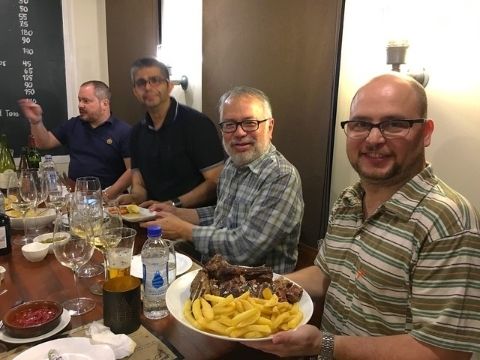
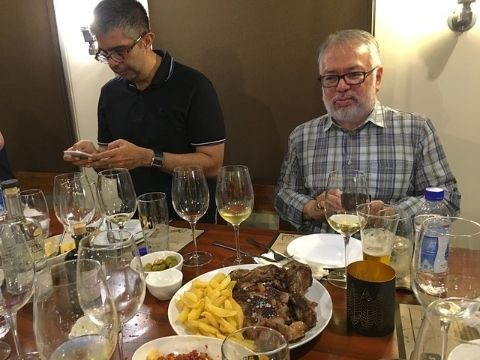
Chuletón with Fries

We hade so many Spanish reds on deck it wasn't funny, mostly young/youngish, but, of course, we had an aged one courtesy of the Stockbroker. Greg was beside himself with glee since many of the bottles were situated near him.

All either left open or decanted around 2 hours ahead of time...

We had 2 recent vintages of Bodegas Mauro Vendimia Seleccionada ("VS"), the 2004 and 2005, Miguel's and mine respectively (the latter a gift to me from Aaron since "Mauro" is my eldest son's name). We went with the logical choice and opened Miguel's 2004 - a heralded vintage and less young than mine to boot.

2004 Bodegas Mauro VS - Miguel's bottle from the Duero river valley at Tudela; this doesn't fall under the Ribera del Duero DOC. Bodegas Mauro was established and is run by Mariano Garcia and his sons. For those few unaware, Mariano Garcia was the winemaker of the legendary Vega Sicilia for over 30 years, until he left in 1998 - so these wines certainly do not lack in pedigree, cache or high ratings, and, are accordingly priced. To my sketchy knowledge, the VS bottling is just below their top of the line Terreus.

Very young, opulent and powerful, this shows off concentrated and very ripe, creamy, deeply-veined black cherry, dark raspberry, violets, oak and licorice with undertones of dark chocolate. Acid is somewhat low in the face of the big, bold, ripe fruit. A modern blockbuster styled wine: forward and unabashed. Needs many more years' ageing, but, with decanting, it is already enjoyable with hearty red meat dishes.

2001 Bodegas Muga Prado Enea Rioja Gran Reserva - Rene's bottle (sourced by Miguel in Spain); together with the immediately-below discussed wine, this was clearly my favorite red of the lunch. Comes off with firmer structure and better acidic balance, there is also a lot of wood, but better-integrated (it is 3 years older, after all) and not as forward. Still quite young, it is fullish in body, earthier and more savory with hints of cep and meat below the dark fruit. Admirable harmony and balance. Very, very nice.

1990 Bodegas Protos Gran Reserva - Yet another aged treat from the Stockbroker. Mellow, soft, mature, displaying bottle age-sweetened refined dark red fruit elixir (cherry, raspberry) over discreet, cassis, leather, cedar, dark spice and violets. Seamless and elegant. Wonderful to have a well-aged Ribera del Duero. Loved it. I drank it alone, enjoying the chuletón to the younger reds.

Everyone enjoys eating at La Tienda

2005 Honoris de Valdubón - Aaron's bottle. I've tried this before from him at a wine dinner he hosted for 15 persons at La Tienda on the 10th August 2009. My notes then are still pretty much on point:

2005 Honoris de Valdubón - I found this one of the better reds of the evening, although, understandably, quite young at this point. Definitive, bright, ripe, slightly spicy and notably deeply-veined red berry/fruit (cherry, strawberry, raspberry), bit of plum with slight, underlying cassis and black coffee. There is quite a bit of oak, but I think it may integrate well enough in time. Smoothly confident, with a long finish. Liked this one. At P4750/bottle, it's one for the cellar.

I had mainly this wine with my chuletón.

I seem to recall there were one or two other reds, but, unfortunately, I wasn't able try them, or, if I did, I no longer remember. I was just having too much fun - it was a raucous lunch as usual with the Stockbroker's and Greg's stereophonic laughter resounding throughout.

We had planned no dessert as we knew we'd all be so full. Javi, however, sent us platters of dried dates with which we were treated to...

1982 Bodegas Toro Alabalá Don PX Pedro Ximenez Reserva - Miguel's bottle. Very deep, mellowly rich, creamy dried figs and dark fruits, dark caramel, molasses, toffee, chocolate, vanilla, with whispers of cinnamon and anise. Mouth-coatingly full with a kilometrica finish. This is certainly on a way different level above all the other PXs I have tried before. It ran excellently with the dried dates.

What a lunch! Everything was great. Thanks to all; and, until the next!

Tuesday, December 1, 2009

The First Commanderie de Bordeaux Manila Induction Dinner.

The evening of 27th November 2009 saw the induction of the first members of the Commanderie de Bordeaux Manila (the "Commanderie Manila") during a grand, wine-filled event at the Manila Peninsula's Conservatory. Well over a hundred Bordeaux aficionados attended, including honored guests from Bordeaux, Hong Kong, Jakarta and Singapore.

Briefly, the Commanderie Manila is a brotherhood of Bordeaux lovers that functions as the "embassy" of Bordeaux wine, its mission is to provide a forum for the enjoyment thereof, and, in so doing, help spread the recognition of and love for the same in the Philippines. The over 70 Commanderies throughout the world owe allegiance to the Grand Conseil du Vin de Bordeaux founded by Henri Martin in 1952 and formalized into a vin-centric non-profit organization in 1975.

As one of the first batch of inductees, I was tasked to write the introductions of all the others for the induction ceremony, as well as read the same thereat, alternating with co-inductee, Felicia Atienza. As such, I had to arrive earlier for purposes of coordination.

L-R: my wife, Mrs. Stockbroker, Aaron Palileo, the Stockbroker and Kenny Quintal

The Vigneron, who, together with Alex Lichaytoo, spearheaded the event, arrived within a few minutes with, among others, Emmanuel Cruse (proprietor of Château d'Issan and Grand Maître of the Grand Conseil), Jean-Michel Cazes (proprietor of Château Lynch-Bages and immediate past Grand Maître) and Vincent Cheung (Grand Maître for Asia).

After a short discussion on the sequence of ceremony, Emmanuel and Jean-Michel donned their ceremonial robes and we were all set for the affair.

L-R: Emmanuel Cruse and Jean-Michel Cazes

A virtual sea of fine Bordeaux rouges awaited us for dinner.

The evening's reds.

2004 Château Pichon Longueville Comtesse de Lalande

2000 Château Siran (Magnums)

1996 Château Lynch-Bages

1988 Château Mouton Rothschild (Magnums)

For cocktails, free-flowing Champagne Billecarte Salmon Brut Réserve and 2007 Château Carbonnieux Blanc. This hefty, well-rounded champagne I've already written several times about, it being my and others' favorite locally-available non-vintage bubbly.

The '07 Carbonnieux Blanc was gracefully floral, elegantly fruited and minerally, and with admirable brightness, freshness and balance - an excellent apéritif and a perfect match for fresh oysters and other seafood dishes.

L-R: Robert Burroughes, Michael Whiting, John Harvey, Aaron Palileo

L-R: The Stockbroker, Christine Miki, Luli and Luigi Bernas, Maja Olivares, Terrence Lim Ong and Rombit Co

L-R: IWFS stalwarts Othmar Ober, Uncle David Lim, Doc Leelin and William-Alain Miailhe de Burgh

Mauro Agustines, Mariana Yulo and Jorge Araneta

Elbert Cuenca, Kenny Quintal and Paco Sandejas

Candy and Johnson Uy with Clifford Lichaytoo

The Vigneron and Eric Perrin of Château Carbonnieux

Thereafter, we entered the Conservatory and the ceremonies began with Emmanuel Cruse's induction of Dong Puno as the Commanderie Manila's first Maître.

Being on stage during most of the ceremonies to introduce each inductee with Felicia, I was, unfortunately, unable to take pictures of every single one of them as they were inducted.

Those whose solo photos I have, though are:


L-R: Bernie Sim, Oscar Ong, the Doc and the Stockbroker


L-R: Keiichi Miki, Alex Lichaytoo, Gaita Fores and myself

The other inductees were the French Ambassador, His Excellency Thierry Borja de Mozota, Jorge Araneta, Edouard Miailhe, Miguel Aboitiz, Felicia Atienza, Clifford Lichaytoo, Louis-Paul Heussaff and Maja Olivares.

Naturally, Felicia and I had to, in turn, be introduced, so Mrs. Vigneron kindly did us the honor.

Thereafter, Emmanuel, as Grand Maître of the Grand Conseil, with sword in hand and uttering a few "magic lines" in French, formally inducted us into the Commanderie.

Bordeaux, toujours Bordeaux!

Formalities done, we all went to our seats to get down to the extremely serious business of eating and drinking.

St-Julien Table

Pichon Lalande Table

Siran Table

Doisy Daëne Table

St-Emilion Table

2004 Château Pichon Longueville Comtesse de Lalande - I drank a good bit of this at Rene's birthday dinner early last month. Alongside a bottle of 2000 Château Smith-Haut-Lafitte, I definitely preferred the younger 2004 Pichon Lalande. My notes on the latter were as follows:

I've not had very many 2004 Bordeaux as they are, to my mind, still very young. The most I tried at a single sitting were eight 2004 Pessac-Léognans during preliminary cocktails at the 2007 Fête de la Fleur at Château Smith Haut Lafitte which the Vigneron invited me to. That said, my general impression is that Bordeaux rouge from vintage 2004, for the Médoc and Pessac-Léognan anyway, is of a more classical character (i.e., more properly austere, reserved, subtly fruited and with better acidic balance) than, say, super-ripe/roasted-ripe modernish 2000, 2003 and 2005. Anyway, the former character/style suits my palate more.

This wine was surprisingly open considering its youth, stylishly displaying Pauillac notes of slight pencil shavings, licorice and cedar infused dark plum, blackcurrant, cassis, with minor notes of raspberry, kirsch (submerged) and violets. Moderately firm structure, notable focus and definition, breadth, mid-palate heft/creaminess, push and wood/oak-integration - all in proper balance. This is a very good wine.

The bottles of '04 Pichon at the subject dinner were fine and consistent with my above-quoted notes. It is undoubtedly a good wine. However, most likely due to its youth, beside all the others, this barely 5-year old 2nd growth seemed somewhat overshadowed.

2000 Château Siran - I've had this wine so many times I've long lost count. The most recent notes I have on it is from a Château Siran vertical dinner at I am Angus on the 26th May 2009. Amongst the evening's wines, this over-performing cru bourgeois more than held its own, and, in the opinion of some attendees, came in No. 2 wine of the night. My previous notes, still applicable, state:

This is still my favorite recent vintage of Siran, and, by "recent" I mean in the past 10 vintage years. It is also the Doc's, so much so that we couldn't help but surreptitiously enjoy his smuggled bottle thereof in a previous Siran dinner.

Already drinking well, but with long life and great potential for even more improvement ahead of it, this suave, smooth/supple-muscled, agile light-heavyweight is just beginning to really strut its stuff. Naturally more open than the previous youngster (vintage 2005), it already displays depth and complexity underneath the fruit. The distinctive spicy notes, some fennel, iron, leather, licorice are well in play, the wood quite already nicely integrated. I enjoyed this a lot, as I always have.


I only add now that beside the younger '04 Pichon Lalande, the '00 Siran's depth of fruit, roundness and harmony were emphasized.

With the main course of roast duckbreast and pheasant...

1996 Château Lynch-Bages - I've had this many times, but, for some reason, my last notes were brief and from back in early December 2005 - too long ago to be relevant now. This is typical Pauillac and Lynch-Bages with the sturdy structure that marks the 1996 vintage. Fair depth, earthy, quietly muscular, serious in its dark, somber fruit, cedar, discreet spice, leather, touches of dark violets, "tar" and gravel. Very smooth and comforting mouthfeel, this is drinking youthfully for a 13-year old wine - a testament to its ageing capability. Then, as now, this is an excellent wine.

The cheese course with membrillo and dried fruit followed, paired with what I am sure was most everyone's most anticipated wine.

1988 Château Mouton Rothschild* - At first sip, this was lighter in body than most Mouton Rothschilds I've had - even the older 1982, 1985 and 1986 not too long ago - evidently not in the typically rich, luxuriously full-bodied Mouton Rothschild style. This is, admittedly, picking nits as the wine is, indeed, a very fine one. As with other first growths, I, however, cannot help comparing it to other vintages of itself.

That said, this wine is mature, just a shade or two below legitimate full-body, and displayed an alluring, complex bouquet of old violets, meat, a slight sanguine nuance, ceps, dark minerality, bottle-age-sweetened cherry and raspberry, black currant, cedar, bit of leather and licorice. Mirrored softly, silken and intricately layered on the palate with an added hint of fig, this came off as a touch feminine compared to the 2000 Siran and 1996 Lynch-Bages at this point. Very fine.

Though I normally prefer white wine with a cheese course, the wine made for a nice match with the cheese - the former's dark fruit giving a cut to the latter (like the membrillo and dried berries) with the earthy/gaminess of the two playing together nicely.

*1988 was the year the late Baron Philippe de Rothschild passed away and the year his daughter, the Baroness Philippine Rothschild took over the estate; hence, a most apt coincidence in that vintage of Mouton Rothschild being served in the first Commanderie dinner in the Philippines.

Because I enjoyed going wandering around, chatting with friends and taking pictures, I did not have my dessert - a small price to pay, and, anyway, I've been putting on weight lately, so it's not like I needed the extra calories.

I was particularly happy to see Grace Vineyard China CEO Judy Leissner that evening, and finally got to meet her husband, Tim, as well. Judy is always so youthfully dynamic, charming and bubbly. Aside from making wine, Judy has an undeniable passion for it to boot. It was great seeing her again - she flew in to Manila just for this dinner and was leaving the next morning.

Here she is in the photo with me above/left and, on the right, clowning around Fabrice Dubourdieu of Château Doisy-Daëne.

Though I skipped dessert, I, of course, did not let the evening's nectar of Barsac escape me without trying a glass.

2006 Château Doisy Daëne - I've mentioned before that Doisy Daëne "is actually a Barsac wine (due to archaic political squabblings, wines from Barsac may be labeled as Sauternes but the reverse is not allowed), generally known to be less unctuous, rich and opulent compared to Sauternes, but lighter-footed and with better acidic balance and lift (an exception that immediately springs to mind is Château Climens, e.g., 1986). I've had several vintages of Doisy Daëne and found this one to be very fresh, nicely floral and well-focused with a notable acid lift/liveliness to its honeyed peach, pineapple and vanilla/oak flavors. I didn't need dessert at all - this wine was dessert in itself.

The crowd then noticeably began to thin, I said my goodbyes to friends and lingered a while longer with my wife, Aaron, Kenny, Kim and Paco over a glass or two more of the 2000 Siran. Most enjoyable evening with fine wines and good friends. Again, until the next!

Monday, November 30, 2009

Bacchus' Press Lunch for Jean-Michel Cazes (Château Lynch-Bages).

I'm not quite a member of the press, my occasional wine-related magazine articles hardly qualify me as one. However, for Bacchus' Press Lunch for visiting Château Lynch-Bages proprietor, Jean-Michel Cazes, this past Thursday, the 26th November 2009, at Old Manila, I was asked to attend in Raul Manzano's stead to cover the event. Of course, I readily accepted. Though Metro Society sent Zari over to take photographs, I, naturally, also took some of my own.

L-R Seated: Dave Celdran, Ana Sobrepeña, J-M Cazes

I've actually met J-M Cazes on a few occasions, the first time on the 6th March 2006, at a Bacchus dinner featuring his wines; Jojo Madrid, Gerry de Jesus and I arrived early so we had J-M all to ourselves to chat with for quite a while. The other times I bumped into him were at a couple of wine events in Hong Kong and a few times with the Miailhes in Bordeaux. I've actually toured Château Lynch-Bages once and eaten at its Café Lavinal a few times, the last time being in June 2007 with lady-chefs Myrna Segismundo and Jill Sandique before spending a rainy afternoon at the old town of Pauillac.

L-R: Johnny Litton, Mickey Fenix and Alex Lichaytoo

More importantly, I am very familiar with the grand vin of Lynch Bages, the crown jewel of J-M Cazes stable of wine estates, having repeatedly enjoyed, to the best of my recollection, at least 18 of his vintages, namely: 1982-1983, 1985-1990, 1993-1996, 1998-2001, 2005 and 2006. Obviously, Lynch-Bages is a wine I favor, having gone through my last batch of their 1999s much faster than I should have.

In a nutshell, Lynch Bages is a showpiece for the Pauillac appellation; it's wines are consistently well-crafted, long-lived, displaying a subtle, dignified power, great harmony, complexity and admirable balance in its deep, typical earthy notes of blackcurrant, cassis, cedar, violets, lead pencil shavings, gravel and dark spice. In any event, we were to have several of the wines from J-M's stable during lunch.

Château Lynch-Bages was so named after Thomas Lynch, son of Irish immigrant-businessman John Lynch. Sometime in the early-mid 18th century, Thomas married Elizabeth Drouillard who had inherited vineyards situated in Bages, including those on the Grand-Puy plateau. By the first quarter of the 19th century, the estate was sold to a Swiss wine merchant named Sebastian Jurine, under whose watch Lynch-Bages was classified a 5th growth (cinquième cru) in the 1855 Classification.

Many years, three inheritances and two sales later, Jean-Charles Cazes, J-M's father, purchased the estate in 1939. In 1974, J-M Cazes took full control of Lynch Bages, and, in 2006, passed the baton to his son and father's namesake, Jean-Charles. Prior to this, J-M also headed AXA's wine portfolio for several years until 2001 when he opted to concentrate on expanding the Lynch-Bages group of wineries.

Being already conversant in the history of the estate and familiar with the Cazes family's wines, I had an interesting chat with J-M Cazes and Dave Celdran about agneau de Pauillac, the area's famed baby (milk-fed) lamb, and certain unscrupulous businessmen's attempts at passing on their inferior products as the real deal. In the meantime, some wines were already being poured:

2006 Domaine des Sénéchaux Châteauneuf-du-Pape - I first tried this over a working lunch at the Lichaytoo brothers' Bacchus Kitchen on the 26th October 2009. My notes from that time were as follows:

An old and respected name in CDP, now owned by J-M Cazes (known best for his Lynch Bages). I'm not very familiar with recent vintages of the Rhône in general, but quick research shows Jancis Robinson and other respected reviewers speak well of (the area's vintage 2006).

This wine's dominant "grapey" scent shows the dominance of grenache (which, as far as I know, is pretty much the norm of CDP blends), with typical garrigue (with thyme and lavender particularly noted) and captivatingly subtle touches of animal (the mourvèdre more than likely) and truffle complexing the moderately spiced fruit. What made me really like this wine were its admirable harmony and balance - not overly hot/alcoholic, exceedingly-ripe and blatantly fruit-forward as many more modernly-styled ones are.

This is smoothly refined, proper and has a classic cut to it. Definitely this is a style I like and prefer. The first few sniffs and sips brought roast venison to mind. Available at Bacchus at around P2600 more or less.

Amusingly, when someone asked how much this wine retails for, I knew Bacchus' price more than Clifford, Bacchus' CFO. I obviously spend too much time at his wine shop.

2005 Michel Lynch Reserve - This red blend falls under the general Médoc Appellation d'Origine Contrôlée (AOC). Basically, this means the grapes which made up the wine came from within a specifically delineated, somewhat triangular, albeit not totally contiguous, area in Bordeaux, containing approximately 15,400 hectares of vineyards. The Médoc AOC is subdivided into the northern Bas Médoc and southern Haut Médoc. Within the latter are situated the four most famous communal appellations of (from north to south) St-Estèphe, Pauillac, St-Julien and Margaux; the other two being Listrac and Moulis (both west of Margaux).

This Médoc AOC reserve is mainly composed of cabernet sauvignon and merlot, though I suspect there is possibly a dash of cabernet franc in there somewhere, partially aged in French oak. Named after Thomas Lynch's son, Michel, a famous wine-maker in his own right and the pioneer of the now standard practise of de-stemming, the subject wine has a very approachable masculine suavitée to it. Medium-bodied, smooth, no sharp edges or angularity, it is easy to drink yet retains the proper austerity typical of classic Médocs. Priced at only P600-P700 per bottle, it is ideal for casual, everyday drinking and, in addition, an ideal food-friendly red for weddings and large parties.

There being no white wines served, the 2005 Michel lynch Reserve, the least heavy among the reds present, was the logical choice to pair with the Pan-Seared Sea Scallops, Blue Cheese and Cauliflower Purée, Crisp Spanish Chorizo, Arugula and Black Truffle Oil.

Thereafter, on its own, I tried the...

2005 L'Ostal Cazes Minervois la Livinière - J-M Cazes vinous venture in the Languedoc-Roussillon region of southern France, Minervois la Livinière is a relatively new (created in the late '90s), 200 hectare specific "sub-commune" made up of 6 villages, the most important of which are La Livinière, Cesseras and Siran. As I understand, pursuant to the area's regulations, wines produced must be composed of at least 40% syrah or 40% mourvèdre grapes and the two grapes, together with grenache, must make up at least 60% of the wine. In addition, the wines have to be aged for at least 15 months before bottling, at least 12% alcohol by volume (abv) and yield is limited to 54 hectolitres per hectare.

Generously warm, very concentrated with evident oak lashings, I tasted mostly syrah in this wine and figured it to be pushing above 14% abv. Unabashedly full-bodied, it shows off indulgently rich, sweetishly roasted-ripe black cherry, black currant and raspberry flavors touched with notes of black pepper, tobacco, violets, a touch of dried Provençal herbs and considerable oak. Quite forward and powerful, I'd pair this with hearty roast meats and game, particularly wild duck, boar and venison.

2001 Château Cordeillan-Bages - This is the signature wine of Pauillac's very best hotel which boasts of a 2 Michelin star restaurant run by Thierry Marx. Cordeillan-Bages owns a tiny 2-hectare vineyard in the south of Pauillac, on the gravelly ridge of the plateau de Bages adjacent to the hotel and the wine therefrom is made by the Lynch-Bages team.

I've found vintage 2001 a pretty classic one in general for Haut-Médocs in general, and Pauillac especially, with old-school typicity and admirable structure similar to vintage 1996 - unlike the recent super-ripe, heatwave vintages such as 2003 and 2005 that appeal so much to so-called "California palates". This small production (well under 1000 cases produced annually) is a good example.

Halfway between medium-bodied and full, this was a perfect springboard for the grand vin of the same vintage. Presenting its predominantly cabernet sauvignon profile of black currant, cedar and underlying black coffee discreetly infused with gravel, pencil lead and violets, it foreshadowed on a lighter frame it's bigger brother's serious depth and complexity.

With the main course of Pepper Roasted Rack of Lamb, Pomme Dauphinoise, Vegetable Ratatouille, Confit of Garlic and Thyme Jus, I had the grand vin.

2001 Château Lynch Bages - I tried this at twice before if memory serves; surely once in an International Wine & Food Society function but I wrote no notes thereon. The 2001 harvest for the grand vin vineyards began on the 2nd of October starting with the earlier-ripening merlot with cabernet sauvignon and cabernet franc following a few days later. The weather cooperated with sunny to cloudy days and high temperatures that allowed for healthy ripening.

Moderately fuller and heftier than the 2001 Cordeillan-Bages and with evidently greater depth and complexity, the grand vin of the same vintage discloses earth, leather and subtle warm asphalt and tobacco nuances underlying the slightly smokey dark fruit, cassis, pencil lead, cedar and violets. Its mouth-feel is also more rounded, the middle more pronounced, with good crescendo and expressiveness without at all being loud or over-bearing. Classically cut, its acidity and structure are noteworthy, as well as its moderately long finish.

This was easily the best wine of the lot, which is hardly surprising. Dessert followed, an indulgent Chocolate Truffle Cake with Honey Ice Cream. It sounds simple, but, though I am not overly fond of rich desserts, it was delicious.

A bracing double espresso during discussions on vine stress, vineyard density and the significance of the number of grapes on each plant brought a close to wonderful lunch. In all, it only remains to be said that we are all most fortunate to have a wide range of J-M Cazes' wines locally available through Bacchus International. In this, the essence of Pauillac, Bordeaux, Châteauneuf-du-Pape and Languedoc-Roussillon is but a mere sip away.

Seated: J-M Cazes; Standing L-R: David Celdran, Alex Lichaytoo, myself & Clifford Lichaytoo

Sunday, November 29, 2009

WSCP René Barbier-Freixenet Christmas Dinner 2009.

This past Wednesday, the 25th November 2009, was the Wine & Spirits Club Philippines' (WSCP) Christmas party at Gene Gonzalez's Café Ysabel. All the wines and some of the ingredients were sponsored by the Palileo family's ADP Enterprises, Inc., courtesy of Aaron Palileo and his wife, Joanne (a.k.a., "Jo").

My youngest brother-in-law, Topsy, and his girlfriend, Michi, came along. Unfortunately, my brother, Tad, is still out of the country and his wife, Chako, was sick, so neither of them could join. We arrived at around 7:30, so many WSCP regulars were already there, including J-Lab; Nelson and guests; and, former schoolmates Marty and Dickie.


L-R: Topsy & Michi; Greg & Jeanette; Gino & China; Arnie


Nelson & guest; J-Lab

The Menu

The evening began with welcome glasses of 2 kinds of cava and Aaron's newly available albariño from Rías Baixas...

Freixenet Cordon Rosado Brut - I first tried this in February 2009 during a kokotxas dinner at La Tienda. My notes then were as follows:

Freixenet Cordon Rosado Brut - A most festive looking Catalunya cava from J-Lab who always must have some bubbly to start (good for the rest of us!). Tastes like there's quite a bit of granacha in this juicy, rounded, fruity, fresh strawberry, raspberry and red fruited bubbly. There is a slight softness and candied nuance to the fruit as a whole which make this very easy to drink a lot of. The bubbles, though, bring exuberance and liveliness to this charming and simply disarming cava.

This would be very approachable to many, I'm sure, and, more than likely, very reasonably priced as well. Great for the beach, big parties and any general light-hearted get-together of friends. We enjoyed this with a few bite-sized slices of boiled chorizo which were very flavorful and spicy despite not being fried (a less guilty indulgence indeed)....

Freixenet Cava Primer Cuvée Brut - A rather straightforward, fresh, crisp, bright and pleasant cava, this presents green apple, citrus (there's a bit of lime in there) and mere hints of pear, zesty yeasty topnote, frothy middle. Good acidity makes this come off as very fresh and cleansing. Very easy to drink a lot of this. Liked it with the mejillones (a.k.a., mussels) and croquetas.

Another fine, traditional/regional match for the mussels was...

2008 Vionta Albariño - From Rías Baixas in Galicia. I first tried this at Aaron's Spanish Wine Dinner at La Tienda on the 10th August 2009. Paired with almejas, escalivadas and boquerónes, it was a big hit with everyone, especially the members of the UK contingent. It wasn't yet available for sale then, but it is now. My notes were as follows:

2008 Vionta Albariño - a newly locally available albariño hailing from Rías Baixas, Galicia, perfectly paired with the almejas and boquerónes (Miguel deftly kept a plate of the latter aside for this wine). With clean flavors of green apple, ripe pear (in the middle), white peach, bit of ripe citrus and a hint of fennel, this was undoubtedly one of the wines of the evening. Paired with the seafood tapas (as well it should as this is the traditional/regional pairing in Galicia), it drew enthused comments from Aled Morris, Dave Stockdale, Brendan Egan and John Harvey. Chef Javi even took a quick break from the kitchen to savor a glass of this wine.

Gene then stopped by our table and my wife re-introduced him to my brother-in-law who I first took to the original Café Ysabel (then on Wilson Street) when Topsy was around 9 or 10 years old. Topsy still remembers the giant chocolate chip cookies of the old Café Ysabel - that was over 20 years ago.

Since then, Topsy, with my father-in-law, would regularly eat at Gene's Lasap and Café Ysabel when they used to hold office office at the nearby Home Cable compound in the mid-to-late '90s.

Gene then took the floor, welcomed everyone, introduced the new/first attendance members and guests, thanked Aaron and ADP Enterprises, and gave everyone a brief run-down of the night's menu.

The pica-picas and tapa courses done, dinner proper was served.

With some hot, freshly baked bread, we had my favorite of the evening's reds.

1999 René Barbier Gran Reserva - This is the third time I've had this wine, and I've liked it every single time. At around P1100-1200/bottle, this is an absolute steal for a good, mature Penedés tinto gran reserva. My previous notes are brief, but still applicable.

This was a suave, confident, more complex wine with violets on the nose and chocolate, leather and slight kirsch to the mellowed, well-knit, softly mature fruit. Warm and somber. I would buy this wine and could definitely drink this on rainy evenings at home.

Those whose tastes lean towards new world fruit bombs may find this "over-the-hill" or "fruit-faded", but old world palates like mine, used to mature wines, I would think will appreciate more this wine's quiet, confident serenity. Confidently recommended.

Next was a Soup of Bacalao with Cidacos White Beans...

..followed by a nice "Fideuà" of Gallo Maccheroni with Sauce Romesco with...

Cosme always used to be the one to serve Topsy in Café Ysabel back in the '90s, and until today.

2005 Château Trimoulet - A first for me. I'd never before had wine from this St-Emilion producer. At this early stage, the wine comes off as a bit rustic and old school. It exhibits typical dark plum and black cherry with minor notes of blackberry, espresso, violats, bit of cigar ash and slight spice . The wood/oak-related notes are very mild, leading me to suspect that little new oak is used in the ageing barrels and those have moderate/judicious toasting (good things for me as many seem to have gone whole hog on new oak in 2005 - probably thinking the extremely rich, ripe fruit of '05 could take a lot more of it). Nice balance, good typicity. At P2000/per bottle for a 2005 St-Emilion, it's good to go.

I used quotation marks on the "fideuà" because the noodle used isn't the traditional one of Valencia, but, for me, this was a very nice dish. I ate three servings of it.

This was followed by my other favorite dish of the evening: Charred Lamb with Cidacos Lentil Salad & Fresh Peppercorn Sauce, paired with...

2005 Château Preuillac - Another new one for me, my first taste from this (Médoc) château. Relatively firmly structured, fleshy and definitely ripe-fruited - true to the vintage. This is obviously young and primary and, as far as I could see, was not decanted for aeration beforehand - so I don't think it was fully opened up. That said, its rounded and fleshy, almost chewy, dominant dark fruit (good amount of plumminess suggests a lot of merlot in the blend) and mild oak (like the Trimoulet, probably not much new oak used) on a slightly over medium body was quite pleasing.

This is not to say this is a fruit bomb, as the acidity and structure are definitely firm. I'd hazard this will hit full stride within 4-6 years. At a mere P1700/per bottle for a 2005 Bordeaux, this suits me and I can (and do) recommend it.

I realize now that I had the two red Bordeaux in switched order in pairing. Not to matter, though, as I do prefer left banks to right when having roasted lamb.

Dessert then followed, an Orion Ice Cream Bombe. One doesn't get to eat the once popular bombes that often these days (the ones made in the old-style spherical molds). A pity, because I do enjoy them. With this we had...

2005 Château Romer - Yet another introductory taste for me. I've never had this producer's wine before. Rather straightforward at this point (as it is very young especially for a Sauternes) in its honeyed, moderately tangy apricot, candied lemon, canned cling peach and lightly creamy oak/vanilla notes. Good acidity, not at all cloyingly sweet. Medium-bodied, good enough focus and a user-friendly character to it. This has many years to go but is already enjoyable, especially when juxtaposed with the cold, creamy bombe.

At P3200/bottle for a 2005 Sauternes, it seems a fair price; after all, a 750ml of Sauternes, for me, is good for up to 14-15 persons - so that comes to roughly around only P214-P230 per pour at full retail. Not bad at all.

Gene then called out his kitchen crew to receive our thanks.

I recall Greg particularly wanted to meet the one who made the lamb course. I could well understand as the lamb was my favorite dish of the evening as well.

Gene then offered us all a bonus eau de vie as a digestif...

2000 Torres Aqua d'Or - Gene said something about something in this wine being extinct. Having consumed a number of glasses by the time, though, I really didn't catch exactly what that was which is extinct - whether the bottling, the process or a grape used therein. A quick check on the web shows that it is an eau de vie (a.k.a., agua de vida), particularly a spirit somewhat similar to grappa except that the former is distilled from white wine (instead of leftover skins and pips), the grapes of which are folle blanch*, moscato d'Asti and trebbiano.

This is a lightly sweet spirit (sweeter than any grappa I've had, anyway), very accessible, with a comfortable warmth. Quite nice actually. As far as I know, however, the only bottles of this in the Philippines are in Gene's cellar.

*Curiously and tangentially, I first got to know about this grape in an e-mail exchange early last month with Garikoitz Rios, the Agricultural Engineer and Technical Director of Bodegas Itsasmendi Upategia (Gernika, Bizkaia in the Basque region). Though it is a grape typically used in Cognac and Armagnac, Gari said it is considered "de muy poco valor enologico" in País Vasco.

Night deepened, encroaching on the day, most others had already taken their leave, with J-lab, my wife and I lingering with Gene over the Aqua d'Or and old stories. It was another fun evening with the WSCP thanks to Aaron and Gene. As always, until the next.

Final Commanderie Lunch Meeting.

The final lunch meeting for the Commanderie de Bordeaux Manila inaugural dinner took place this past Tuesday, the 24th November 2009, at the Bacchus Kitchen. The guests from Bordeaux, Hong Hong, Jakarta, Singapore, etc. would be arriving in a few days for the event and Alex wanted to put the finishing touches on everything. We also had to fit the ceremonial robes we were to wear during our induction. Aside from Alex and a F&B representative from the Manila Peninsula, the Stockbroker and Oscar were already there when I arrived.

Discussions started with yet another beautifully crisp salad (with artichokes this time) and a report on the number of people attending.

We got to pick and choose our own dressings from a choice of 3.

Initially, it was planned that the inaugural dinner was to be for 100 people, but we wound up expanding to around 120, more-or-less, with a reported 30++ person waiting list. All of us who had committed a table of 10 each two meetings ago had already delivered and paid up. The Vigneron had delivered a lot more.

There was some nice, earthy pasta on the table, as well as a platter of seared corned beef slices. Alex offered to cook everyone up some burgers, but I declined. The foregoing was more than enough for me.

Having over-indulged in wining and dining the past couple of weeks, I was happy with a relatively light lunch and was, actually, a bit relieved to see no open bottles of wine. I figured, at least this way, we would surely get more work done and quickly....or so I thought.

Alex couldn't help himself and started breaking out more goodies from his Rockwell Epicerie for us to try, starting with some smoked salmon and smoked salmon belly. I accepted just a tiny bit, just to see the difference - the smoked salmon belly was a lot creamier, yet delicately flavored.

My personal favorites were the melt-in-your-mouth Smoked Magret de Canard...

...and the sinfully good seared-then-roasted foie gras. The latter, is, as I understood, a relatively new product they are selling at the Epicerie - a lot of individual single, serving-sized cuts of foie that are blast frozen and come in a resealable bag. Thus, one doesn't have to thaw and cook a whole foie every time serves it at home (like I have always done). Incredibly convenient. Easy to cook as well since you don't have to carefully slice up the foie and risk crumbling the stuff.

Per Alex and Clifford, you simply take from the bag as many slices you want each time, sear each side over medium heat until caramelized (approximately 1-2 minutes per side) and pop in a 350º oven for another minute or two. Voila - instant foie gras. The Stockbroker bought a whole bag for his wife right then and there. It is very good quality, and most convenient to have at home.

By that time, Bernie and Gaita had arrived; Bernie breaking out 3 bottles - 2 reds and a sweet wine (the latter for the foie and dessert) while Alex commenced fitting Gaita for her robe for the event. Since Gaita is quite petite, I think her robe was the only one that really needed any work. For those of us "robust" individuals, well, the robes were just fine as-is. I recall Gaita updating the group regarding the floral arrangements, table set-up, etc. which Maja was also attending to.

I gave a run-down on the inductees' individual resumés that I had already received and assured the group that I could write up all the introductions before the event for Felicia and I to read.

In the meantime, Clifford arrived and the wines had begun to pour...

...starting with...

1998 Cape Mentelle Cabernet Sauvignon - I think this is the first time I've tried an Aussie red from Bernie, and am sure this is the first time I've heard about this producer (not that I know much about Aussie wine). Bernie and the Stockbroker told me that it was a very Bordeaux-esque wine and could possibly be mistaken for one if tasted blind.

It was, to me, at first blush, more concentrated and extracted than a typical Médoc (that which I am used to anyway), with a pronounced, rich, sweetish, ripeness - but not over-the-top. This, with a marked fruit-forwardness indicated "new world" to me, but, then, it wasn't served blind. Well-integrated, moderately toasty oak permeated crème de cassis, dark plum/fruit compote, sweet pipe tobacco, toffee, licorice and dark minerality. Bit of smokiness as well.

Quite a long finish with a somewhat dense, indulgently round and soft, mouthfeel. The alcohol is evidently on the high side, but, noteworthy is the good acidic balance in this wine. In all, this was clearly the best balanced Aussie cabernet sauvignon blend I've ever tried.

Bernie had one of Alex's burgers as his main course. What does a 6-term president and wine master of the International Wine & Food Society have with his burger, you may ask?

1997 Château Pavie Macquin - I do enjoy trying out so-called "off-vintage" Bordeaux from good makers - relishing finding ones that thumb their noses at professional reviewers' sweeping vintage assessments and, occasionally, precipitately dismissive notes. One such less than a year ago was a forgotten 1997 Château Lascombes that I found deep in my father's cav late last December. For notes on a dinner featuring other good off-vintage wines, click on this.

This is yet another good wine from 1997. It has a charmingly rustic character to its fleshy, well-concentrated, molten dark plum, black cherry, underlying cassis/blackcurrant, violets, dark minerals, hints of leather and tobacco ash and well-integrated oak. Halfway between medium and full body, with notable structure considering the vintage. Notable depth. Efforts like this in a vintage considered weak by most surely helped in the producer's promotion to the rank of premier grand cru classé in the 2006 St-Emilion re-classification.

With the above-mentioned foie gras and as dessert, we enjoyed...

1989 Domaine André Ostertag Pinot Gris Sélection de Grains Nobles - Opulent, thick, luxuriously lush and rounded (it is botrytised after all), spicy-and-floral, sweet/honeyed kumquat, super-ripe peach, confited pear and pineapple with hefty, well-integrated vanilla/oak. Acidity was pretty much adequate, keeping the wine from being too cloyingly sweet. Very nice with the foie and well-suited as dessert in itself.

Work done, the Stockbroker and I lingered a while longer with Clifford. Good meeting; we looked to be pretty well prepared for the coming Commanderie event. Thanks, as always, to Alex for the food, and, of course, to Bernie for the wines. If anyone is wondering where to purchase any of the ingredients/products that composed our repast, they are readily available at Bacchus' Epicerie in Rockwell.

Friday, November 20, 2009

A Night of Snake River Farms & Wine.

Thursday night, 19th November 2009, I was at Enderun's Restaurant 101 for Kosh Sehwani's Snake River Farms ("SRF") Dinner. I don't really know whose idea it was to invite me, but I'm pretty sure it was Mike Stephenson's idea as I've been a customer of Kosh's premium meat distribution company (Alternatives Food Corp.) for around 3 years - ever since Boozze told me they sold US prime grade rib-eyes. Since then, all the steaks served in my house are from them.

Kosh and Restaurant 101's Chef See

Shortly after my arrival, an endless stream of immediately recognizable Champagne Jacquesson Cuvée 732 NV (I've been having a lot of this lately) poured as Kosh gave a brief talk about the quality of Snake River Farms products while the EO-heavy crowd watched and listened attentively...

Ricky & Bubu Andres, Mike Stephenson and Vince Grey

It was nothing really new to me, though, being an old customer. I'm even aware that most all the restaurants I haunt (e.g., Je Suis Gourmand, Ciçou, Mamou, Sala) get their beef, kurobuta pork and what-have-you from Kosh's company. Chef See thereafter took the floor and explained how even Snake River Farms' less rarefied cuts make for excellent dishes. I tried some of them (pass-arounds) and he was right, especially the mini satay skewers with peanut sauce. Had I not known that at least a kilo of meat per person was budgeted for the evening, I would have eaten more of them.

I must mention that, aside from Mike who I haven't seen in a while, I was particularly happy to see Jay and Bambi Sy at the dinner. Ever since I left EO, I rarely bump into them - mainly in restaurants as they are also intrepid foodies. They are always very nice and fun to be with. Very charming couple. Moreover, it turned out that we all wound up seated at the same table together with Edward Lim and Annette who, I later discovered, likes wine, used to be my neighbor in Greenhills and our respective parents knew each other from there. We had a good table.

It is no secret that, though I do have very high regard for the real deal Kobe beef from Japan (it is so fatty that my palate tires after a few bites), my favorite beef is US prime-grade beef. I've tried countless others, including the touted Charolais from France (I must have eaten a lot of these white cows the first time I visited Burgundy), and, though, many are most acceptable, for me, nothing beats a thick, juicy, rare slab of US prime beef.

Being able to make a pretty mean steak myself (or so I think), I consider 90% of the game is using high quality beef. The remaining 10% is proper heat and timing. Sounds easy, but I am sometimes surprised how many accomplished cooks at fine restaurants can't seem to get it right. The latter was definitely not the case last night, as Chef See's dishes were all impressive (it was my first time in Restaurant 101). A glance at the menu (which was earlier sent to me by Mike) told me the pairing wines were all from Premium Wine Exchange (PWX).

Our meal started off with Cured, 5 Pepper Crusted Sashimi of SRF Black Wagyu Tenderloin with Three Aïoli...

...paired with...

2005 Shea Wine Cellars Estate Bottled Pinot Noir - The fruit of this wine hails from Oregon's largest AVA the Willamette Valley. While I am by no means an expert at US pinot noirs, I've found those I've had from Oregon more to my personal taste than those from California. The former seems to possess generally better acid balance and the wine is not so in-your-face. Whether it is the cooler Oregon night temperature or the local winemakers' general style that is key to better acidic balance (or, at least, my impression thereof), I really wouldn't know.

The wine presents good nose of sweetish, darkly spiced ripe cherry and damson compote, slight bit of cola, underlying dark berry, slight vanilla and a merest whisper of sous bois. These are joined by a cinnamon nuance in the mouth, all on a plump body, midway between medium and full. The fruit is nicely soft, slightly candied, not over-ripe. Well-crafted, with a pleasingly rounded mid-palate feel.

I would never mistake it for a Burgundy, it is a good New World pinot noir that really blossomed when sipped after the tender wagyu tenderloin "sashimi" starter - the wine's gentle, sweetish-ripeness subtly tamed the heat of the 5 pepper crust in admirable counterpoint.

Fine marriage. I had a rosé from Château Troplong Mondot in my wine bag, but there it stayed. I could not have paired this starter any better than it already was.

Next was a bowl of SRF Black Wagyu Chuck Short Rib Ravioli in Tomato Basil Broth, with which we were served...

2004 Bodegas Felix Callejo Reserva - A powerful, creamily oaked tinto from Ribera del Duero. I tried a bottle of this wine just a week shy of a year ago at a paella night by Marc Aubry, during which an impromptu Spanish wine taste-off ensued. My notes on it then were as follows:

Another modern/international 100% tempranillo from Ribera del Duero: dense, powerful, very ripe (not as sweetish as the Alion), full-bodied with generous toasty oak in its mouth-coating, darkly spiced blackberry, cassis, black cherry, black coffee and licorice. This is also a forward wine but in a more no-holds-barred, pedal-to-the-metal style. Huge drive and push on the palate, with a comparatively feisty character and firmer structure.

At P2200 per bottle full retail at Premium Wine Exchange, it is one of their best-selling wines.

The wine is pretty much the same, save that it seems to have dialled itself down a few notches - which, to me, is a good thing. In addition, it showed off considerable depth of fruit, indicating to me that the grapes must have come from older vines (likely an average of over 40 years). I must admit that this pairing initially puzzled me. After having the dish and wine together, however, it somehow worked pretty well - the slight acidity of the tomato and garlic laced broth, together with the shredded beef's earthiness blended well with the spicy, oaky dark fruit. Nice surprise. I knew then that my rosé would be coming home with me that night.

As regards the dish itself, what made it for me was the broth's excellent aromas. The tomatoes smelled and tasted just nicely ripe, freshened and sweetened by the basil, with an artful, seamless touch of garlic, complexed by the earthy shredded short rib ravioli. Bien jugado, but don't just take it from me...

...the empty bowls and quickly emptying glasses were ringing testaments to the goodness of the food, wine and marriage of the two.

Then arrived the dish I was most anticipating that evening. Having been eating a lot of steak lately (as can readily be seen in my recent posts), I was really looking forward to the Slow Cooked, Honey Glazed Kurobuta Belly on Roasted Sweet Potato and Apple Cider Reduction.

This was undoubtedly my favorite dish and pairing of the evening. I knew the dish would be good - slow cooked Kurobuta belly (sous vide in this case - different from oublié au four because of the use of the vacuum-sealed plastic bag and immersion in water) then glazed under a salamander, how could it not be? Add to this a classic Teutonic touch of apple (apple cider in this case instead of the ubiquitous apple sauce), and the flavors couldn't go wrong.

Pairing a relatively buxom California chardonnay with roast pork tenderloin with apples has always made sense to me. Chards have base flavors of apple and pear, those from California a pronounced fatness/buttery/vanilla/oak leaning and, at times, a slight honeyed note to the ripe fruit - just the ticket for honey-glazed pork with apples. Because it was kurobuta belly, I brought along a bottle of 2006 Saintsbury "Brown Ranch" Estate Bottled Carneros Chardonnay (also from PWX). I decided, however, to first try Kosh's chosen pairing wine before opening my bottle. Long story short, my chardonnay kept my rosé company in my wine bag on my way home.

2006 Flowers Sonoma Coast Chardonnay - This is a nice one. Its aromas lived up to its name, presenting lightly honeyed, slightly buttery baked apple, ripe pear, vanilla/oak - all laced with acacia flowers and a slight nuance of orange blossom. The scents were mirrored on the palate with a touch of leesy creaminess, touches of tarte citron and white minerals, in a full, rounded but nicely-packed body balanced off with adequate acidity. The wine finished with a flourish of acacia flowers and moderate vanilla/and oak notes.

The pork dish seemed to bring out more of the orange blossom nuance, the fruit ran with the glaze and brightened the rich pork, its acidity giving a subtle cut. I exhaled flowers and honeyed fruit. Loved them together.

I guess Peter Angliongto liked it as much as I since he seemed to be subtly hinting for more.

A Passion Fruit Granité cleansed and refreshed our palates of the pork's richness...

...to prime us for yet another indulgent dish: Grilled SRF Black Wagyu Steak and SRF Kurobuta Short Rib Hash on Roquefort Crushed Potatoes and Red Wine-Grain Mustard Mousseline.

In the interim between courses, I poured my bottle of 2001 Antinori Pian delle Vigne Brunello di Montalcino to go with the main course (after all, I had already opened it earlier in the day just to make sure it wasn't corked or otherwise damaged). Ever since Oscar's Night at L'Opera over a year ago, I have strongly favored Tuscan and Piedmontese reds with grilled red meats - pulling them out more and more often, it seems, than Bordeaux, Burgundy or Napa cabs. The last time I opened a bottle of this particular wine was a little over 7 months ago during one of our Italian wine lunches at Pepato. My notes then were:

My bottle, 100% sangiovese (called "brunello di Montalcino" in the Montalcino area). I've had this wine a few times before (as well as a few of other vintages of it). The Doc was the one who introduced me to this wine many several years ago. I last had this from the Stockbroker during his 2008 birthday lunch, side-by-side the more modern 2001 Casanova di Neri Brunello Montalcino. My notes then are still applicable:

"2001 Antinori Pian delle Vigne Brunello di Montalcino - Off the bat, from the aromas, I opined that this one was closer to the classic/traditional style: More of sweet cedar, touch of camphor, ripe strawberry, raspberry, cherry, cassis, underlying espresso, light touch of licorice, tobacco, minerals, violets, a whisper of leather. The fruit was not as sweet, but well-ripened as well, and earthier in character.

Clearly more earth-driven (rather than fruit-driven) compared to the other wine - less polished, rounded and sleek as well; but firmer in structure, much better focus and definition. Much more properly reserved. I liked them both, but much preferred this wine as a match for the steak. This is more of an eating wine, it needs food to show its beauty, where the other wine I enjoyed more alone. I accepted a second pour of this one and drained every drop. Excellent match. Loved it with the steak."

This bottle was, as earlier mentioned, decanted and aerated since 12:15 - so over an hour before serving. I like the firm but flexible, somewhat lean but sturdy structure of this wine. Showed more apparent leather notes than last time. Definitely masculine brunello, if not particularly complex, but a no-brainer pairing with the steak.

Of course, I also had the evening's pairing red with the steak.

2005 Long Shadow Vintners "Feather" Columbia Valley Cabernet Sauvignon - 100% cabernet sauvignon from Washington State. Randy Dunn is the winemaker here - I became aware of him because of Tina Caputo's short documentary entitled "Robert Parker's Bitch" (nb: made for Vineyard & Winery Management Magazine), where Dunn bravely lambasted the US Emperor of Wine (the film was made way after the 2005 vintage; Parker's Wine Advocate gave this wine a score of 93).

Crème de cassis, black currants, blueberries, black cherry, licorice, cedar, slight cinammon, bit of violets; very evident but not over-bearing dose of oak. Sturdy, strong, yet not loud, blowsy or over-wrought. Somehow, it comes off balanced enough. I noted the alcohol push though - surely over 14% abv. This was a bread-and-butter, no-brainer reliable pairing. Good, but I, honestly, prefer more acidity in a red to pair with thick, grilled, well-marbled cuts of red meat such as the evening's steak.

I took the lull before dessert as an opportunity to grab another quick smoke outside. By the time I returned, the alcohol had obviously taken its desired effect on most everyone.

Marc Aubry then walked in donning an elaborately designed shirt. I only then realized it was the first time I've seen him not dressed in his chef's whites. Unfortunately, I forgot to take a photo of him.

Trio of 101 Desserts: Panna Cotta on Raspberry Coulis, Hazelnut Macaron with Frangelico Ganache and Green Tea Opera Cake. Those who dine with me regularly know well that I normally take just one or two small bites of dessert before abandoning it for a double espresso. However, I finished every bit of the above trio - all except for the chocolate base painted on the plate - and only because it was too difficult to scrape it all off without endangering the plate.

I then proceeded to my usual double espresso to keep me awake for my southward drive home - they certainly serve great espresso at Restaurant 101, I must say. The night deepened and Edward took a not-so-French leave. Even Jay, for all his ironman/triathelete stamina, started to look a little worse for wear. This is a sure sign of a successful wine dinner.

Several cigarettes and stories swapped outside with Marc, I thanked the evening's host, said goodbye to Mike and made my way home. A great meal and well-thought wine pairings with friends made for a fun night.

Monday, November 16, 2009

Monday Afternoon Italian Wines.

I was supposed to attend an Italian wine lunch at Pepato organized by Miguel this Monday, 16th November 2009, but had to beg off for various reasons - one of which was because I had been having too much to drink too often, accompanied by too much rich food. Around 2:45pm, though, I was able to catch up from my office for "just a glass or two". Well, it turned out to be 6 glasses, but not full pours.

Aside from Miguel, the Stockbroker, J-Lab, Aaron and Greg were there - everyone with their respective bottles (or 3). They went through 10 bottles including Italian whites, but, as I said, I tried only 6 of them.

At first, the Stockbroker gave me a glass of a "Mystery Wine", asking me to try to identify at least the country of origin. I noted a sweet, spicy, crème de cassis, cherry/raspberry, plum syrupy smell with mocha and vanilla/oak thrown in, all topped by a raw, tinny, somewhat saline, scent. In the mouth, it tasted of ultra-extracted, sweet and candied red fruit over dark. The finish started off sweet, turning to sourish cherry. I guessed it was from South Africa. I was wrong. It was a...


...2007 Csányi Pincészet Villány Prestige Cuvée, a Hungarian wine, the first red wine I have ever tried from Hungary. It was really not to my taste, and, apparently, everyone else's as I that saw nobody drank down their glasses of it.

That bit of novelty over, the real wines poured for me.

1990 Tenute Cisa Asinari Dei Marchesi Di Gresy Camp Gros Martinenga Barbaresco - The Stockbroker's bottle. Dense, rich, very ripe, soft, somewhat meaty, jammy violets-and-old rose infused dark fruit/black cherry compote, hints of dried fig, truffles, aged balsamico, leather, well-integrated oak. Undoubtedly full-bodied, concentrated, deeply extracted, stylish, very broad, generous and expansive. Very round and hefty middle, velvety-molten tannins, good enough complexity, with a long, strong finish.

Acidity is notably low compared to other nebbiolo-based wines I've tried. Very nice in a somewhat modernish style of Barbaresco - and one could say heavenly after the Hungarian red. I'd think this is in a good drinking window now and can probably hold for 4-6 more years.

1998 Giacomo Conterno Barolo Cascina Francia Serralunga d'Alba - Miguel's bottle, brought home from his most recent trip to Piedmont for sure. Comes off with more typicity with brighter acidity, firmer structure (than the preceding wine - this is a Barolo after all) to its drier, more minerally, less fruit-forward character. Less dense, not as big or rich and lighter-footed than the preceding wine; there is no jamminess to its dark fruit, violets, black coffee, leather, "tar" and slight licorice/dark spice. Very fragrant, with clean and neat lines and admirable purity. Drinking very well now, but can undoubtedly gracefully age for many, many more years.

1989 Château Lagrange - Aaron's bottle. I know I've had it since then, but the last time I opened a bottle of this was over lunch with Miguel, Rene and Santi at Je Suis Gourmand during our 2008 Christmas lunch. My notes from then are still pretty much applicable:

1989 Château Lagrange - A highly-regarded and over-performing 3rd Growth from St-Julien in the Médoc. Much credit for Lagrange's success is given to the steadfast and generous financial backing of the Japanese owner (Suntory) and the talented Marcel Ducasse. To the best of my recollection, I've had only their 1986, 1988, 1989, 1990, 1995, 1996 and 2000 vintages - all when Marcel Ducasse was still in charge of the château, before Bruno Eynard took over in 2007. From that virtual handful, however, I have been impressed by the high standard, reliability and consistency of their wines. They may be quite generous with the oak, but the wines have always been in balance in my experience.

x x x x x

This wine, the 1989 grand vin, was warm, comforting, earthy with subtle hints of game and truffle (which is why, after much thought, I chose this in the end for the pairing). Its molten darkly ripe fruit and cassis have an earthy, roasted character (not torrefaction though, more like warm gravel). Mild nuances of cedar, old worn leather, tobacco and well-integrated oak. Slightly over medium-bodied, but not legitimately full. Low acid, just barely enough to keep it in balance. Not as lush, stylish or expansive as the 1990 version, this is comparatively somber, more serious and quietly reserved. Good depth to it.

The wine didn't have the acidity to present any cut to the venison, but it did walk hand-in-hand with the earthiness of the latter. A good pairing, I think, but I could have done much better. I really just felt like drinking something mature. I think the guys liked it.

Next opened was a sweet white.

2006 Mueggen Passito di Pantelleria (Salvatore Murana) - Miguel's bottle. Wild flowers and honeyed dried apricots, sultanas and concentrated cling peach. It is, of course, sweet and rich, but with good depth. Though I do like the Italian passitos I've tried before, they all seemed a bit simple to me. This is different in that there is a bit of complexity to this and it is notably graceful. Very nice indeed.

Though we had moved to a sweet white, Greg wanted some more red "to finish off the cheeses", and, so opened...

1999 Pio Cesare Barbaresco - Greg's bottle, popped and poured. Very classically cut Barbaresco, clean lines, well-defined, well-focused and firmly structured. A bit tight and austere initially, but it fleshed out a bit in the glass with added truffle, violets and a touch of meat in its tar-infused, darkly spiced black cherry on a body halfway between medium and full. Not anywhere as complex or deep as the above Martinenga Barbaresco or Cascina Francia Barolo, not as stylish as the 2001 Michele Chiarlo Barbaresco, but has notable typicity and is, undoubtedly, well-crafted old-school Barbaresco.

A double espresso and a few cigarettes later, it was back to the office for me at a little past 5pm.

Mille grazie, amici miei!